NEEDLE VS PIERCING GUN
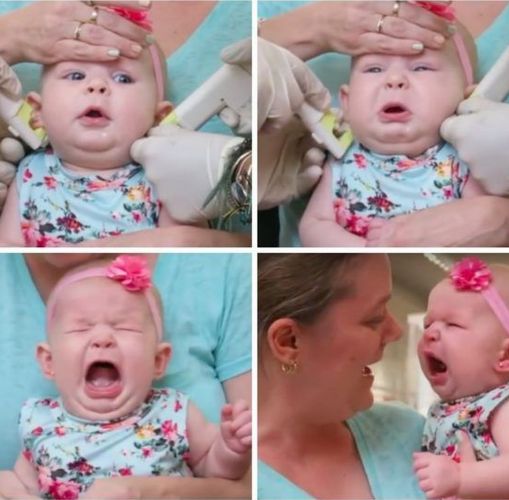
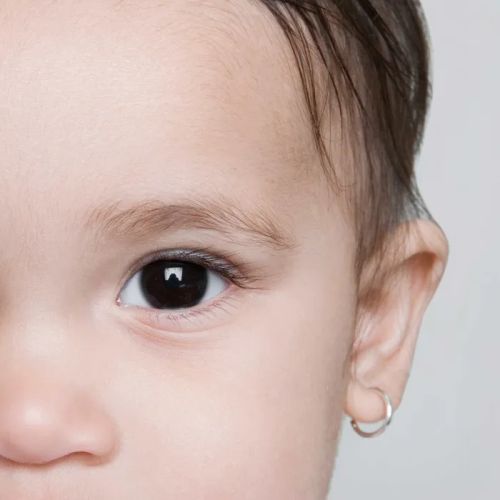
In Croatia (and around the world), there is still a tradition of piercing the earlobes of very young children.
Sometimes their ears are pierced before they leave the maternity ward for the first time.
If you are thinking about piercing your child’s (or your own) earlobes “quickly and painlessly” at a nearby jewelry store or shopping center,
please read the information on this page before making a final decision.
If you decide that a “piercing gun” is good enough for you or your child after that, good luck.
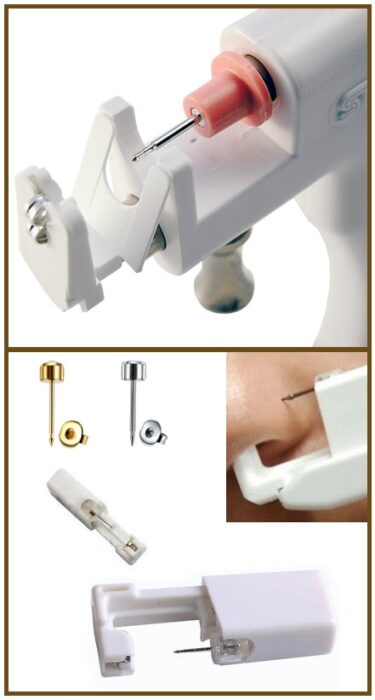
You have probably walked past a jewelry store that has a sign in the window saying “Painless ear piercing“. This “painless” procedure is done with a “piercing gun”, a device that looks like a gun and has a piercing mechanism at the end of the “barrel.” The front part of that piercing mechanism holds the earring, and the back part secures the earring, often referred to as a “butterfly” or in more recent models, a “stud.” The earlobe is placed between these two parts of the piercing mechanism, you press a button, and the device shoots the jewelry through your ear (similar to a gun firing nails).
Older models of the “piercing gun” were 100% reusable, which means the same equipment was used on many clients without the possibility of sterilization. Today, the piercing gun has a replaceable piercing mechanism – the device remains the same, but the part that comes into direct contact with the client is changed. Unfortunately, this does not solve all the problems that can arise after getting pierced with a “gun”.
1.Risk of infections and blood-borne diseases
A “piercing gun” cannot be sterilized in an autoclave due to the plastic components it contains. This means it can only be disinfected, which is by no means sufficient when it comes to piercing, i.e., a fresh wound. When using a “piercing gun”, small blood and tissue particles can be dispersed on the device due to the force of the semi-blunt earring striking the tissue, potentially coming into contact with the piercing of the next client.
Bacteria that are normally present on a person’s skin, which do not pose a problem unless they come into contact with a wound, can also be transmitted from one person to another using a “piercing gun”. Keep in mind that bacteria are not visible to the naked eye, and the surface may appear clean even when it is not.
Fortunately, in Croatia, diseases like AIDS and hepatitis are not as widespread as in some other countries in the world. However, this doesn’t mean that they do not exist or that the risk of transmission should not be considered.
Disinfection is not the same as sterilization! Hygiene conditions in piercing salons should be at a hospital level (imagine a clean hospital, as Croatian hospitals are not the best example). This means that the only acceptable method for sterilizing equipment and jewelry is through the use of an autoclave. An autoclave is a device in which sterilization is performed with pressurized steam at 2 bars and a temperature of 134°C for a duration of 30 minutes. Before sterilization, all tools and/or jewelry need to be manually cleaned using a disinfectant. They are then placed in an ultrasonic bath for deep cleaning and packaged in special sterilization pouches that maintain their sterility until they are opened.
2.Not everyone has equally thick earlobes.
The jewelry used with a “piercing gun” is of standardized thickness and length. If a person has thicker earlobes, the jewelry will be too short, preventing proper healing and leading to swelling, inflammation, and the jewelry growing into the tissue of the earlobe over time.
In most cases, “medicinka” (initial jewelry for the “piercing gun”) is not suitable for the earlobe, and it is strongly discouraged to use this method for other parts of the body. Piercing jewelry will always be a foreign object in the body and must be anatomically adapted to the part of the body where it is placed.
3.Damage to surrounding tissue during piercing
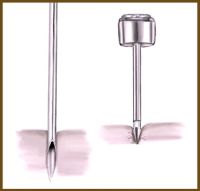
A “piercing gun” fires a blunt earring through the part of the body being pierced. The procedure itself is more painful than piercing with a sharp needle that easily passes through the tissue. Piercing with a blunt object can damage the tissue around the piercing area, which is a much greater problem when dealing with the cartilage of the ear than with the softer earlobe tissue.
Ear cartilage is connective tissue without major blood vessels, so its nutrient supply depends on the tissue that covers it. If this covering tissue is damaged, various problems can occur.
4.Goldsmith vs. Piercer
People who pierce ears in jewelry stores have likely not undergone any training related to bloodborne diseases or cross-contamination. They have simply been given a “piercing gun” and started piercing ears because it’s considered the “easiest” thing to do. In some jewelry stores, they don’t even wear gloves, which is a clear violation of even the lowest hygiene standards. The “training” required to use a “piercing gun” consists of reading the instructions on how to use the device – where to place the earring and where to press to make it fire. You can be ready in less than 5 minutes.
A goldsmith / jewelry store clerk might explain aftercare for your new piercing something like this: twist the earring as much as possible to prevent it from sticking to the ear, clean the piercing with alcohol or some strong disinfectant several times a day, and after a few weeks, replace the jewelry with whatever you like. Wrong, wrong, and wrong!
Twisting the jewelry in a new piercing irritates the wound, usually leading to swelling, the growth of scar tissue around the piercing, or infections (because people touch the piercing with unwashed hands or cross-contamination occurs when the hands are clean but something dirty is accidentally touched and then the bacteria is transferred while touching the piercing).
Applying alcohol or strong disinfectants to the wound (the piercing is a wound during the healing period) also causes irritation in the piercing area. Alcohol is a good disinfectant when used on undamaged skin. When it comes to piercing, cleaning with alcohol will lead to irritation in the piercing area. The skin becomes dry, red, overly sensitive, and painful to the touch. The jewelry won’t be able to move freely within the channel because the dry skin will constrict it too much, and any accidental movement will result in tissue damage, pain, and irritation.
A piercing is considered fully healed when the channel epithelializes, meaning new skin grows inside it. For the earlobe, this takes about two months, while for ear cartilage, it can take 6-12 months. Healing periods can vary depending on individual immunity and other factors. Premature removal and reinsertion of jewelry can damage the piercing channel, causing the entire healing process to start over. Since the piercing heals from the outside in, it can appear fully healed well before the healing period has passed.

5.Poor quality jewelry.
“Medicinka” earrings are typically made of basic metals, which some people may have an allergic reaction to. Jewelry for initial piercings should be made of implant-grade materials such as 316L surgical steel (ASTM F138, ISO 5832-1 standards), titanium grade Ti6AL-4V ELI (ASTM F136), or bioplast (biocompatible plastic).
Silver and gold are not implant-grade materials! Bone plates, pacemakers, and other medical implants are not made of gold but are typically constructed from titanium and steel. Keep this in mind when considering the piercing jewelry you will wear in your skin for several months without removal.
The clasp on the backside of the jewelry becomes a challenging task for careful and thorough cleaning of a new piercing. Its grooves collect lymph, blood serum, and dead skin, creating an excellent breeding ground for bacteria. Sleeping with the “butterfly” clasp guarantees nightmares as the earring will stab you every time you press on it.
6.Asymmetrical positioning.
People who use “piercing guns” usually do not ensure that your ears are pierced symmetrically. In most cases, they don’t even mark the piercing location for the client to see and approve.
Earlobes are different for everyone, and there is a variety of anatomies, some of which are more demanding for proper and symmetric positioning. Individuals with very small and narrow earlobes need to be cautious to avoid positioning the piercing too low, as over the years, the hole may stretch (especially due to wearing heavy earrings) and can tear.
One of the reasons we do not pierce the earlobes of children under 12 years of age is that their bodies are still developing, including the shape and size of their ears (there is a significant difference in ear size when a child is 2 years old and when they are 12). Often, we have clients whose ears were pierced in early childhood, and now they want to add more piercings to their earlobes. This can sometimes be problematic because the initial (old) holes were pierced asymmetrically, too low, or too high to create an aesthetically pleasing alignment that follows the ear’s natural contour.
7.Problem solving
One of the advantages of a piercer over a “earring-shooting gun operator” is the expertise and education about what they do. People who use “piercing guns” primarily engage in jewelry sales, not piercing. They might be great at selling gold earrings with diamonds, but if your pierced ear becomes infected or any other issue arises, the only advice they can provide is to remove the jewelry and consult a doctor. Once the jewelry is removed and the piercing is inflamed, the hole will close, and you’ll be left without the piercing. The doctor will probably prescribe you an antibiotic course, and “the problem is solved.”
The main task of the piercing profession is to create beautiful, long-lasting, and healthy piercings. Your piercing is a reflection of our work and experience, not just a showcase for the jewelry we sell. We strive to perform every piercing excellently, whether it’s an earlobe with the cheapest jewelry we offer or a symmetrical nose piercing with branded gold jewelry with precious gemstones. If you have any problems with your piercing, your piercer is there to solve them – even years after you got the piercing. As mentioned earlier, piercing jewelry is a foreign object, and the body needs time to accept it, sometimes a few years (depending on the position and other factors). Not every problem is resolved by removing the jewelry and taking antibiotics. There is a significant responsibility on the client to identify problems promptly and visit the piercing studio for an examination as soon as possible.

One of the main reasons why piercing ears at a jeweler is so widely accepted and popularized is its financial affordability. Ear piercing at a jewelry store typically costs around 4.00 euros or is free with the purchase of their earrings, which on average cost around 10 euros. We hope that this text has succeeded in explaining that the difference between piercing with a “gun” and a needle is not just about money and that it’s worth investing in your own health or the health of those you love the most.
If you plan to pierce the ears of a child so young that they can’t even speak yet, please consider the following: no matter how brief, ear piercing is not entirely painless, and your child will feel that pain. A small baby needs to receive a complete sense of security from their parents, especially from their mother, as they are helpless and unable to protect themselves. If you, as a mother, firmly hold your little baby, who cannot understand what is happening, while an unfamiliar person inflicts pain on them (by piercing their ears), it can create trauma or a sense of mistrust in the child because they cannot rely on you to protect them from pain. There is no research on this topic, and this statement is not supported by scientific facts. However, just think about it before putting your child in that position. If your child absolutely must have earrings for whatever reason, wait at least until they are old enough for you to explain that the piercing will hurt and that they must not touch the earrings with unwashed fingers.
TRADITION IS PEER PRESSURE FROM THE DEAD.
For some people, piercing (in general) goes off without any difficulties, while others end up in the Emergency Room because of it. The healing of a piercing is influenced by numerous factors, including the piercing method and equipment used, the jewelry and everything related to it (shape, composition, dimensions), how the piercing is maintained, your immunity and habits, accidental snagging or blows, etc.
No one can guarantee that everything will always be fine with your piercing. Jewelry is a foreign object, and various inflammations and infections are possible, especially during the healing period. That’s why it’s essential to carefully consider the conditions under which you get your piercing and to have a piercer who can assist you in case of problems.
How you choose to get pierced and what you choose to wear in your body is entirely your decision and responsibility.