TATTOO AFTERCARE
There are no universal instructions for tattoo aftercare; each studio determines its own.
Octopus tattoo studio is not responsible for damages to the tattoo if you did not follow our aftercare instructions.
Not all tattoos require identical care; some are easier to maintain than others. This depends on:
- the type of tattoo – a small tattoo consisting mostly of lines will heal much faster and be easier to maintain than a large tattoo filled entirely with color
- your skin type and the general condition of your body – people with a strong immune system heal wounds more quickly
- the position of the tattoo on your body – tattoos on the bends of arms and legs require a bit more attention
Your tattoo is as individual as your skin, so do not listen to advice from friends and acquaintances about aftercare because what worked for them may not work for you or your tattoo. The skin is a living organ, and a tattoo is a surface wound. Sometimes during the healing process, the skin may push out ink in certain areas of the tattoo. If you notice this happening, be sure to come in for an examination and a free touch-up. Octopus tattoo studio is not obligated to provide a free tattoo touch-up if damage occurs due to non-compliance with our tattoo aftercare instructions and/or general neglect of the tattoo. If the client’s carelessness causes scabs or pimples to form on the tattoo or leads to inflammation or damage to the tattoo in any other way, the repair will be subject to the regular salon price list. To avoid unpleasant situations, please be honest in such cases because our tattoo artists have enough knowledge and expertise to recognize damage caused by inadequate care for the tattoo.

AFTERCARE PROCEDURE
After a tattoo is finished, it is protected with regular household transparent foil, and you should start following these care instructions after 3-4 hours. You should repeat the entire process (wash-dry-moisturize-protect) every 2-3 hours, except when you sleep.
- WASH
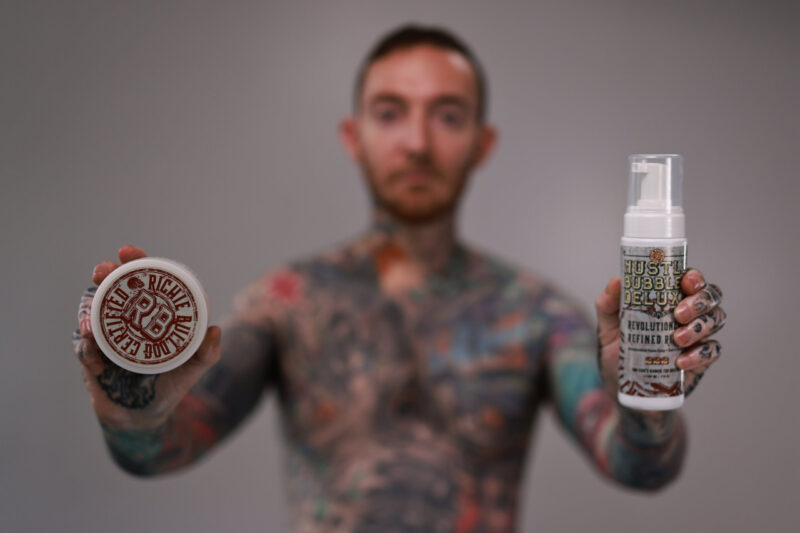
Wash the tattoo with a liquid antibacterial soap with a pH of 5.5 (e.g., Hustle Bubbles Deluxe or similar) under a gentle stream of lukewarm water. You can wash the tattoo under the shower or over the sink during the first two weeks. Do not immerse it in water (bathtub, jacuzzi, pool, sea, rivers, lakes) for at least the first 4 weeks. During the first few days, the tattoo may sting if you wash it with too hot water. - DRY
Pat the tattoo dry with a paper towel. Do not use a regular towel as it may leave dirt on the tattoo (dust, hairs, etc.). - MOISTURIZE
For moisturizing, you can use Hustle Butter Deluxe, Bepanthen ointment (not cream or lotion), Azena magic tattoo balm, or a similar professional product designed for tattoo aftercare. Always apply in a thin (transparent) layer. Applying a too-thick layer of ointment can inhibit the skin’s ability to breathe and may lead to inflammation or the development of pimples on the tattoo. It is crucial to keep the tattoo consistently moisturized to prevent scabs from forming, which, when they fall off, can pull some of the ink with them, causing damage to the tattoo. If the product you are using absorbs too quickly and dries out, switch to another product. - PROTECT
You will need to protect the tattoo with foil for the next few days (once the surface layer of ink starts peeling, you should no longer use foil). Household transparent foil serves as protection for the tattoo against external factors (dirt, chemicals, cosmetics) and acts as a barrier against fabrics (clothing or bedding) sticking to the tattoo. Since the skin cannot breathe under regular foil, wearing it for extended periods can lead to skin inflammation. Whenever possible, keep the tattoo exposed to the air (without foil), well moisturized, and free from contact with fabric or dirt. When you cannot keep the tattoo uncovered (while working or sleeping), apply foil. This is particularly important during the first few days, especially at night. If fabric sticks to the lymph and blood that ooze from the tattoo, scabs may form, and when they fall off, they can pull out some of the ink, causing damage to the tattoo.
A tattoo heals only when a new layer of skin forms over it. This skin is very thin and sensitive in the first few months after getting the tattoo, so it is essential to be cautious about factors that could result in skin or tattoo damage.
For larger tattoos, during the first three days, lymph, blood, and excess tattoo ink will ooze from the skin. This is normal and nothing to be concerned about. The tattooed area may be swollen and painful for a few days, and bruising may also occur. If the tattoo feels hot to the touch 3 hours after getting it, you can apply a cold compress (e.g., a clean towel moistened with cold water) over the foil. You can continue applying compresses (always over the foil!) until the skin’s temperature evens out.
If you got tattooed for more than 5 hours in one day, you can take a Brufen or Lupocet before bedtime (do not use medications that dilate the circulatory system, like Aspirin) to prevent a rise in temperature or inflammation.
Remove the foil applied by your tattoo artist 3-4 hours after getting the tattoo and follow the General Tattoo Aftercare Instructions for the next week.
TATTOO PEELING
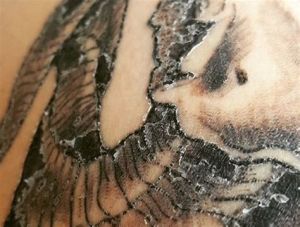
A few days after getting a tattoo, the surface layer of ink will begin to peel. In the case of smaller and line-based designs, this process may not be noticeable, while with larger designs, you may feel like nothing will remain of the tattoo after the peeling. In either case, there is no need to worry; this is a normal part of the tattoo healing process.
Avoid picking at the peeling skin as this may damage the tattoo; let the skin flakes fall off naturally.
It is essential to distinguish between peeling and the formation of scabs – scabs develop in the deeper layers of the skin and, when they fall off, they can pull some of the ink, resulting in damage to the tattoo.