Mini tattoopedia for all your Frequently Asked Questions
The tattoo community throughout the European Union will remember the year 2022 for the chaos caused by the introduction of the REACH regulation. Although the media hyped the ban on over 4,000 potentially carcinogenic substances in tattoo inks, no one bothered to explain to the general public in an understandable way what this was all about.
 What is REACH?
Registration, Evaluation, Authorisation and Restriction of Chemicals (REACH) is a legal directive through which the European Union regulates permitted substances in tattoo inks and permanent makeup.
How and why was REACH created?
The aim of the directive is to increase the safety and quality of products, specifically inks that are introduced under the skin or on mucous membranes, to protect the end user from potential health issues. While the goal of the regulation is commendable, the implementation itself is somewhat questionable.
REACH has been in the works since 2015 when the European Commission requested the European Chemicals Agency (ECHA) to assess the risks of chemicals in tattoo inks and permanent makeup. They were looking for chemicals that are carcinogenic, toxic, or irritating to the skin or mucous membranes. Two years later, in 2017, a proposal for the restriction of certain substances was submitted for evaluation to the Risk Assessment Committee (RAC) and the Socio-Economic Analysis Committee (SEAC). In 2019, RAC concluded the harmfulness of certain chemicals to human health based on EXISTING scientific evidence about these substances – no new research was conducted.
SEAC conducted an assessment of the benefits of banning certain substances for human health, cost-related assessments, and other socio-economic impacts. They agreed that the restriction of certain substances is the best risk control measure for potentially dangerous chemicals. RAC concluded that there are currently adequate alternatives for all pigments except for BLUE 15 and GREEN 7, while SEAC concluded that restricting these two pigments would not have a negative economic impact on the supply chain or lead to an increase in product prices. In July 2020, the restriction of pigments was supported by EU member states, despite a petition to preserve Blue 15 and Green 7 pigments signed by over 180,000 people. The regulation was accepted in December 2020 and came into effect on January 4, 2022.
What does REACH mean for EU tattoo artists?
The directive comes into effect two years after the global crisis caused by the coronavirus. We won’t delve into the psychological impact of the lockdown and other measures on people; instead, we will focus on the financial and economic aspects of the crisis. This period was difficult for everyone, with the hardest-hit being businesses that rely on direct customer contact and cannot be conducted from home, except illegally (such as hairdressers, beauticians, dental and medical clinics, tattoo and piercing salons, and more). The prices of consumable products used in these businesses on a daily basis increased significantly. Many small businesses closed during this period because people couldn’t withstand the financial pressure and overall uncertainty.
REACH was passed a few months after the beginning of the COVID-19 crisis, and, according to common sense, it was expected that a retrospective review of the directive’s impact on the tattoo equipment market would be needed. However, this did not happen. REACH is only in force in EU member states, and tattoo artists in these countries are required to replace all tattoo inks they have in their studios with new inks that comply with the regulation. This means that a large quantity of inks had to be discarded, which resulted in a financial loss. The new tattoo inks introduced to the market are on average 30% more expensive than the existing inks that the tattoo industry has used for years. So, the SEAC’s conclusion that REACH “will not have a negative economic impact on the supply chain or lead to an increase in product prices” is no longer realistic.
In the months following the introduction of the regulation, tattoo artists panicked and bought up all the available inks, causing a shortage in the market and resulting in increased equipment prices. New inks could not be produced in sufficient quantities and quickly enough to meet the demand. The price increase of equipment also led to higher costs for the end user.
While chaos reigns within the EU, European countries that are not EU members continue to operate as before. People who wanted to get tattoos with inks that are unavailable in Croatia, for example, simply went to neighboring Bosnia or Serbia and got tattoos there at lower prices. Or they went for tattooing “in a private arrangement” meaning they visited someone who tattoos illegally, has access to all colors, and charges lower rates because they are not subject to any regulations, tax payments, or similar requirements that legal businesses must adhere to.
Potentially harmful substances
We hear about a very large number of banned substances, 4,000 of them, making the end user wonder what they have been putting in their bodies and be grateful that they are still alive after the ingestion of all these harmful substances. However, the banned substances are those that should not be used on mucous membranes or inserted into the eyes, and those that are only allowed in products that are rinsed off the skin, and so on. The regulation is based on rules, testing, and research from the cosmetics industry, not ours.
Although these industries are similar, it is not the same when, for example, hair dye colors your scalp and cannot be washed off for a month – that is not desirable. But in tattooing, it is definitely desirable that the ink you introduce under the skin stays as long as possible. Imagine getting a tattoo and it’s gone after 3 months because your body has broken it down.
Laws and rules that regulate a specific profession should be based on research conducted in that particular industry.
Every day, we introduce various toxins into our bodies through food, cigarettes, alcohol. A single visit to McDonald’s is probably more harmful to your body than getting half your body tattooed. Alcohol and cigarettes are not banned, despite numerous studies on their harm, only warnings of their potential harm are placed on the products. The key word here is POTENTIAL. Everything can be potentially harmful if it is not used correctly, if it is used excessively, and so on. There are no 100% certainties or rules in life. If you are afraid a bus will run you over, don’t leave your house. If you are afraid of lung cancer, don’t smoke. If you are afraid of getting cancer from a tattoo, don’t get one.
We all agree that some rules should exist and that every professional must follow them. However, when such regulations are introduced, the industry is usually not asked for its opinion or participation. A relatively recent local example is the introduction of mandatory hygiene minimums for beauticians, hairdressers, tattoo artists, and piercers. This was certainly necessary, and it would have been great if it had been introduced earlier, as many beauticians were surprised to learn that the UV sterilizers they had been using were not suitable for the kind of work they do. One profession indeed received new and useful information. On the other hand, the part of the script that deals with tattooing and piercing is sadly sparse, and the information dates back to the late ’90s. There is talk of ear piercing with a ‘gun’ and soldering tattoo needles – practices that died out at the end of the last century. Attempts to contact the relevant authorities to modernize the script remained without any results.
Lost pigments
Some limits set by REACH cannot be met; this specifically concerns the production of tattoo inks. Tattoo ink manufacturers source ingredients from other manufacturers. If there are no available alternatives for a restricted ingredient, the tattoo ink cannot be produced. This is exactly the case with Blue 15 and Green 7 pigments. Banning these two pigments results in the unavailability of an entire range of inks containing these pigments.
What is interesting in this whole story is the fact that REACH has no issues with the red pigment, which has long been known in the tattoo industry as potentially problematic for people prone to allergic reactions. The reason for this is, again, that the entire directive is based on research conducted for permanent makeup and the cosmetics industry. Since no one applies permanent makeup to lips or eyebrows with blue or green colors, it seemed that banning these two pigments would not be missed or present any problems for anyone.
In the very beginning, the issue was not verified manufacturers of tattoo inks who have been in the market for over 20 years, continually improving and testing their inks, having certificates, and having their inks tested in practice, and so on. The issue was the lack of specific regulations regarding the acquisition of inks and tattoo equipment produced outside the EU, from the vast Asian market. The biggest paradox is that literally anyone can order a tattoo starter kit from eBay or Amazon, and it arrives ‘no questions asked’. They can start tattooing at home without any knowledge of what they are doing, without any inspection, regulations, industry rules, etc.
Banning certain chemicals does not cover other, more common problems:
- Infections and inflammation due to poor maintenance or low hygienic working conditions.
- The potential for the transmission of blood-borne diseases.
- The growth of scar tissue due to an unprofessionally executed tattoo.
- Working in the black market.
There are no schools for tattooing as there are for beauticians, hairdressers, dentists, and the like. Tattooing is a craft that is learned from a mentor, an older tattoo artist with at least 5 years of work experience – although, unfortunately, today, this is not a guarantee of quality work. There are tattoo artists who have been in the industry for 20 years and are still at the same level of quality as they were at the very beginning. Every tattoo artist who values their work will choose only proven inks and materials because they are aware that their job depends on the quality.
From our perspective, REACH has not achieved greater safety for the end user. The only result of this directive is the additional increase in costs for legal studios that take their work seriously and the potential for increased earnings for illegal tattoo artists. Well done, EU.
Tattooing is an activity that involves constant exposure to various contaminants, and it’s essential to ensure there is no cross-contamination. Cross-contamination is the transfer of bacteria and/or other microorganisms from one item to another. During the tattooing process, this means that the tattoo artist must be careful not to touch objects that are not protected by disposable film with gloves that have been in contact with the client’s blood. The client should also pay attention to items that the tattoo artist touches with the same gloves used for tattooing to prevent the transfer of bacteria to the wound.
Hygiene conditions in a tattoo studio should be at a hospital level (although Croatian hospitals might not be the best example for comparison). Due to the lack of legal regulations for the tattoo industry, there are no prescribed conditions that a tattoo studio must meet, putting the end user in an awkward position as they have to conduct their own research on what to pay attention to during tattooing.
Since 2020, Croatia has introduced mandatory hygiene requirements for all employees of tattoo and piercing studios.
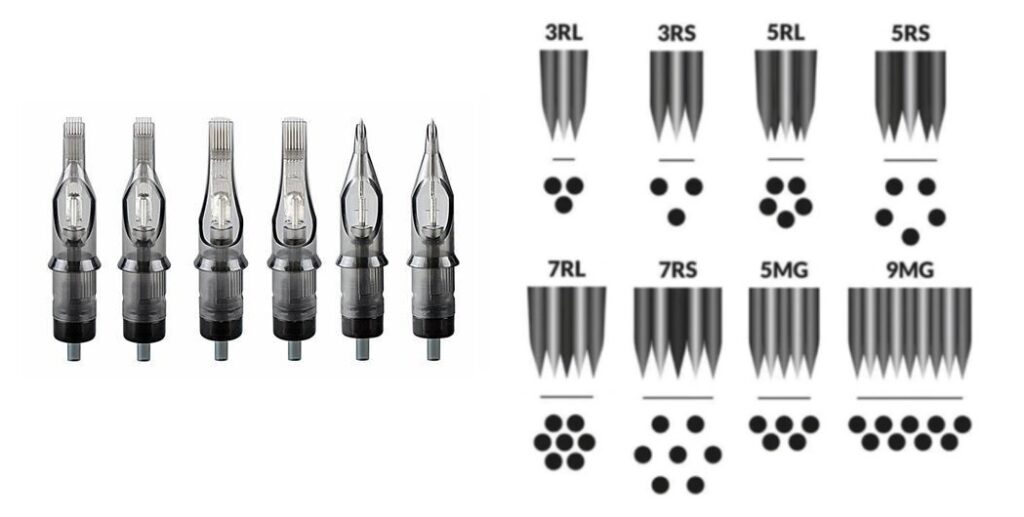
The development of the tattoo industry has significantly improved the safety level in tattoo studios because needle cartridges are primarily used for tattooing. These are disposable “inserts” for tattoo machines that are purchased separately, packaged, and sterile. There are various types of cartridges for different tattooing needs, such as “liners” for creating lines, “shaders” for shading, “magnum” for filling larger areas, and they also differ in the number and position of needles in the cartridge.
Everything that comes into contact with the client during tattooing must be disposable and/or sterile. The bed on which the client lies cannot be sterilized, but it must be disinfected and protected with a disposable impermeable cover before each new client. The table’s surface, where the tattoo artist keeps their tools, must also be disinfected and protected appropriately. This includes all bottles with tattoo ink, disinfectants, and anything else the tattoo artist might need during the process. The tattoo machine, its power supply, and cables are also covered with plastic sleeves to prevent contact with small particles, lymph, or ink. Small containers in which the ink used for tattooing is placed, known as “ink cups,” are purchased separately, packaged, and sterile. They are opened just before starting the tattoo, as well as the needles themselves.
During the preparation of the workspace (the table and bed), the tattoo artist must wear gloves. These gloves are also worn during skin preparation (shaving and applying stencils). For the tattooing itself, new clean nitrile gloves should be worn, and they may need to be changed as necessary until the tattooing is complete. Nitrile gloves are used due to their higher resistance to tearing compared to latex gloves and their lower permeability, which is essential for tattooing since the gloves are in constant contact with various disinfection and skin lubrication preparations for several hours.
All equipment used for tattooing at Octopus comes from reputable suppliers of tattoo equipment. The entire workspace is disinfected and protected before each new client, and all equipment in direct contact with the wound (tattoo) is sterile and disposable.
Used needles are disposed of in specialized containers for infectious waste, which is collected on a monthly basis by Remondis Medison, a company authorized to handle infectious medical waste.
You can see/download certificates of the successfully passed hygiene minimum at the provided link.
The tattoo inks we use are produced in accordance with high safety and hygiene standards in the industry and are subject to various tests before being introduced to the market.
We offer a full range of colors used for various tattooing styles. These colors can vary in thickness, lightness or darkness, and some are specifically made for certain tattoo types (e.g., blackwork). In the diverse range of tattoo inks on the market, you may also come across lower-quality colors that contain harmful metals or are diluted.
Tattooing is a profession that is not fully legally regulated in most countries. Therefore, a significant part of the responsibility for one’s own health falls on the client. If a person chooses to get a tattoo in an illegal studio or through a “private arrangement” at someone’s house, often due to cost considerations, they assume the potential health consequences of their decision.
At Octopus, we use only 100% vegan tattoo inks that have not been tested on animals.
Black tattoo ink is carbon-based, and allergic reactions to it are extremely rare. People may occasionally react to red or green inks. If you are prone to allergies (especially to food products) and want a colored tattoo, a dot test can be conducted. Small dots of the ink to be used in the actual tattoo are applied to the part of your body where you want the tattoo, at least two weeks before the tattooing, to allow your skin to react. If there is no reaction (redness, itching, swelling, rash), you can proceed with your desired colors. The cost of the dot test is 40.00 eur (the tattoo is paid for separately).
If the colors in your tattoo closely match the natural color of your skin, there is a high probability that they will fade over time. This applies to various shades of yellow, orange, brown, pink, white, etc. Keep in mind that tattoo ink does not cover your skin’s natural pigment, so the same color may look different on two people. White ink can take on a yellow or brownish shade when exposed to sunlight.
The inks we use:
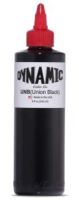
DYNAMIC UNION BLACK
Specially formulated ink to comply with European REACH regulations from 2022.
It has an exceptionally smooth, super-rich black color with the same durability and quality as the original Dynamic Black Ink but with a slightly more matte finish.
Dynamic Ink is a company with a long history of producing tattoo inks, dating back to 1990. It does not contain ingredients of animal origin and is not tested on animals.
Manufactured in the USA. Safety Data Sheet download.
IAMINK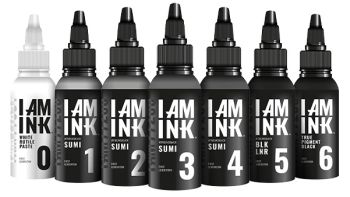
A line of tattoo inks developed entirely in accordance with the REACH directive.
The company’s goal is to combine the highest applicative technical requirements of artists with the highest quality pigments and raw materials. Although the inks are relatively new (on the market since 2019), they have proven to be a worthy replacement for older pigments.
They do not contain ingredients of animal origin and are not tested on animals.
Manufactured in Austria, EU.
Product specification download. SDS download link.
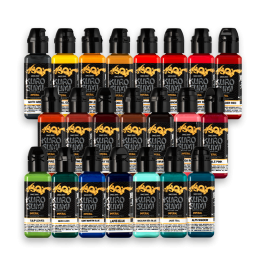
KURO SUMI IMPERIAL
Another veteran in the tattoo ink manufacturing industry has adapted its products to the European market.
Imperial is a line of inks formulated in compliance with REACH regulations and currently contains about 30 of the most sought-after shades.
Kuro Sumi has its origins in Japan and later moved its production to the United States.
These inks do not contain ingredients of animal origin and are not tested on animals.
Manufactured in the USA.
Certificate download. SDS & other certificates link.
Skin is not paper, and in tattooing there are certain professional rules, one of the most important being the minimum feasibility – the minimum recommended tattoo size depending on the level of detail in the design.
Skin is a living organ and it changes and ages over time. Along with it, the tattoo changes as well. Lines may slightly expand, colors may not be as intense as they were initially, and the overall design loses some of its sharpness. If the design is initially tattooed too small, in a few years it probably won’t be possible to discern what it was supposed to be.
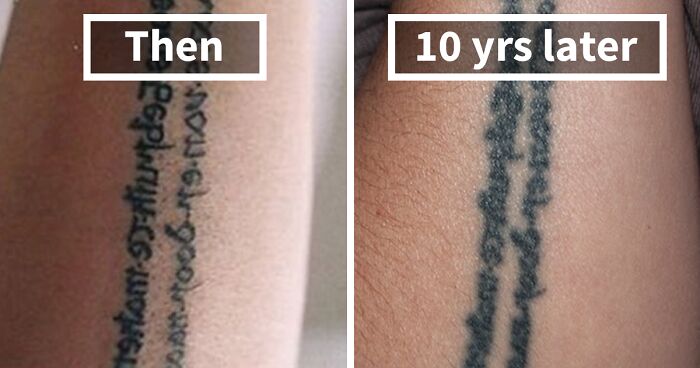
Two lines should be at least 2-3mm apart for the tattoo to look good in the long run.
When a client comes with an example of the tattoo they want, it is often a picture of someone else’s tattoo taken from the internet. What you probably won’t find with that image is a picture of a healed tattoo, at least 5 years old or more. If there are ‘before‘ and ‘after‘ pictures, they refer to the tattoo that was just made (on the day of the tattooing) and the healed tattoo (1-2 months after tattooing). Of course, you can’t expect a tattoo studio to track the client for 10 years to take pictures of their old tattoo, nor can you expect the client to return after so much time just to have their tattoo photographed.
Every professional tattoo artist will warn you if the design you want to tattoo is too small. This is not done to extract more money from you, but to ensure that the tattoo looks beautiful and of high quality in the long run because it still represents the work of that tattoo artist.
Almost every design can be tattooed in a size smaller than recommended, and you will definitely find someone who will do it for you. Keep in mind that once the tattoo becomes a hard-to-recognize blur, it often can’t be fixed.
If ‘temporary tattoos‘ truly functioned as advertised, i.e., disappeared within a few years, all tattoo parlors would offer them because it would be financially viable considering the demand. You may have noticed that there is no exact time period in which the color is supposed to fade; one salon says 6 months, another says 3 years, and the internet mentions 6 years… Despite the advancements in science, technology, and related industries, there is still no ink that is completely degradable once injected into the second layer of skin (dermis) with a needle.
In terms of durability, we distinguish:
- tattoos – the ink goes into the dermis, lasting permanently (can be partially or completely removed with lasers)
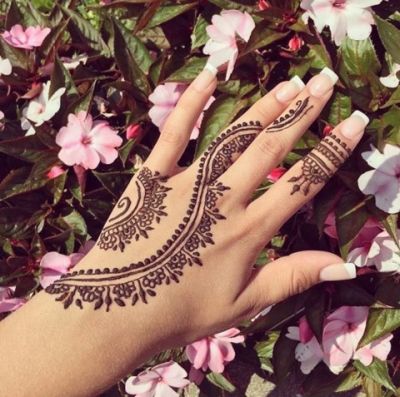
- body paint – ‘henna tattoo,’ located on the skin surface, lasts 1-4 weeks
- ‘sticker tattoo‘ – waterproof stickers, lasts 1-2 weeks
‘Temporary tattoo‘ or ‘bio tattoo‘ is a term that some salons use to create low-quality tattoos. This statement is not intended to offend anyone; we are simply stating facts based on years of experience in professional tattoo parlors in Croatia.
Tattooing is a specific craft that is learned over the years, like any other. Since there are no schools for this type of work, the only way for someone to learn tattooing is to find a mentor with years of experience. Seminars and courses lasting a few weeks do not provide enough knowledge and experience for a profession closely related to human health, bloodborne diseases, art, anatomy, etc. People who can draw on paper are not automatically good tattoo artists because the skin is a living organ, and tattooing has entirely different rules. Anyone can be a tattoo artist, but not everyone can be good at it.
The staff of a cosmetic or hair salon will create a ‘temporary tattoo‘ in the same way as a permanent one – by injecting color into the skin. People are not robots, so perfect precision cannot be achieved at every part of the tattoo (we are talking about differences smaller than 1-2mm). For this reason, some parts of the ‘temporary tattoo‘ remain visible even 10 years after application because the color is injected too deeply, i.e., at the depth where tattoos are done (dermis). Parts where the color is injected more shallowly (in the epidermis) will fade over time and disappear because our skin cells are constantly renewing. The result will be a partially erased, unrecognizable image.
This does not necessarily mean that people in ‘temporary tattoo‘ salons want to deceive you; most of them genuinely believe they are selling the ‘real thing,’ as advertised. Unfortunately, few take the time to delve deeper into what they do (by ‘delve deeper,’ we mean reading more than one article on the internet). Before deciding on a ‘temporary tattoo‘, ask them to show you pictures of works several months or years old, if they have any.
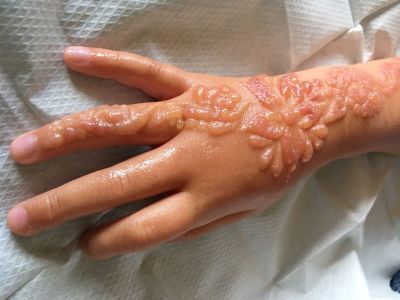
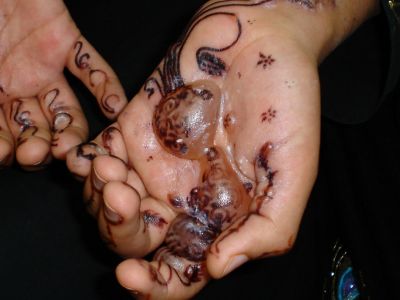
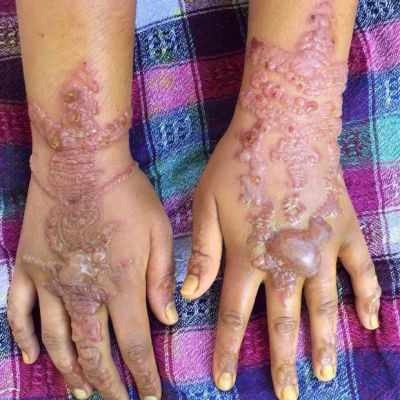
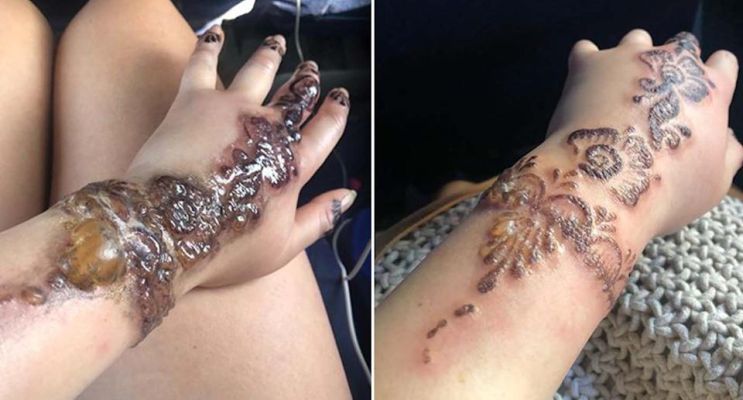
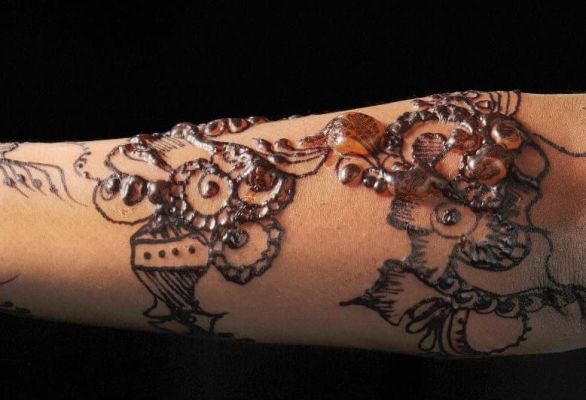
When decorating the body with henna, be very cautious because allergic reactions are common and intense, regardless of whether the color is on the skin surface or in the skin.
The color is obtained from the Lawsonia inermis plant and is dark red (natural henna). Variations include neutral henna (obtained from the Senna italica plant) and black henna, which you should be extremely careful with.
Black henna often contains artificial dyes and chemicals (e.g., para-phenylenediamine – PPD) that give a beautiful black color on the skin but can cause extreme allergic reactions and lead to scar formation if the color is left on the skin for more than 2-3 days. Henna can also be dangerous for people with G6PD deficiency syndrome.




Most people tend to think that getting a tattoo in the summer months, due to the associated risks, is akin to playing Russian roulette or jumping out of a plane with a second-hand parachute bought at a flea market.
You can get a tattoo at any time of the year as long as you take proper care of it.
Depending on what you’ve tattooed and where on your body, the summer heat or winter cold can make tattoo care a bit more challenging and slow down your daily routine. So, to avoid your tattoo disrupting your long-term plans (e.g., going on a trip or lounging at the beach), it’s good to know some useful information about taking care of it in advance.
SUMMER
Heat and sweat can lead to irritation of the tattoo in the first ten days. It’s advisable to leave the protective film off as often as possible so the skin can breathe. Occasionally applying a cold compress over the protective film helps lower the skin temperature and reduce initial inflammation. Cooling the skin is particularly desirable for larger tattoos, regardless of the season, to calm the irritation caused by tattooing. Sunbathing and tanning beds should be avoided at least two weeks before and after getting a tattoo, and after that, protect your tattoo with SPF50 sunscreen. Frequent and prolonged exposure of the tattoo to the sun results in faded colors. Submerging the tattoo in water should be avoided for at least the first four weeks. You can shower, but swimming in the sea, pool, rivers, and the like is not advisable as it can affect the healing process. One advantage of getting a tattoo in the summer is that you don’t have to wear multiple layers of clothing, so your tattoo can be exposed more often without the protective foil.
WINTER
Due to the greater amount of clothing, maintaining a new tattoo can be somewhat challenging, especially when you’re not at home. For this reason, you need to use the protective foil more frequently, which prevents air from reaching the wound and can result in inflammation. You should also be careful about sweating when you’re wearing a lot of clothing and frequently moving between heated indoor spaces and the cold outside. If sweat remains on the skin for an extended period, and you have a foil over your tattoo, it can lead to irritation or inflammation. During the winter, the skin needs more hydration, so it’s important to regularly moisturize the tattoo for several weeks after getting it to avoid a ‘flaky’ appearance and skin tightening. One advantage of getting a tattoo in the winter is that, by summer, the tattoo will have fully healed, and you won’t have to worry much about sun exposure.
If you have an old tattoo that you want to renew, fix, or completely cover with a new one, visit our salon for a consultation or send us pictures of your old tattoo.
Some tattoos can be fixed, and some cannot, depending on factors such as: the size of the tattoo, its darkness, its location on the body, the quality of the original work, etc. If the design was initially done too small, the lines have spread, and it’s now unrecognizable, replicating those lines may cause even more damage. In such cases, we can either cover it with a new tattoo or attempt laser removal.
When it comes to a cover-up, you might not be able to choose every aspect of the new tattoo. This doesn’t mean you have to tattoo a crocodile if you want flowers, but the new tattoo should be adapted to the old one for a more successful cover-up. Be prepared for the new design to likely be somewhat larger than the old one, and it will need to be considerably darker in the area of the old tattoo.
It would be ideal if the old tattoo could be tattooed over with skin-colored ink and make it disappear, but tattooing doesn’t work that way.
A tattoo on the skin is not like paint on a wall that you can simply put a new layer over. It’s more like watercolors on paper – whatever color you put on, the paper absorbs it. If you put black ink on it and let it sit for a month, then add a lighter color on top of it, you’ll get an undefined dark color. The same would happen if you were to tattoo over it with skin-colored ink – it wouldn’t disappear, but it would become blurry and leave you with an undefined blotch.
As of 2021, Octopus offers laser tattoo removal services. The success of removal depends on several factors, but at the very least, the tattoo can be faded, giving you more options for a cover-up.
Scars are areas of fibrous tissue (fibrosis) that replace normal skin after an injury. Scar tissue consists of the same protein (collagen) as the tissue it replaces, but it’s formed differently. Types of scars include:
- Hypertrophic scar: Forms within the boundaries of the injury with a thin layer of reddened skin that rises from the surface. It looks like a small fleshy bump.
- Keloid scar: Darker in color and extends beyond the edges of the wound. People with dark skin that has more melanin are more prone to keloids, which can grow to the size of a golf ball.
- Atrophic scar: Depressed or indented scar.
Strictly speaking, stretch marks are not scars, but we can categorize them as ‘skin damage.’ Stretch marks occur due to the loss of collagen fibers in certain areas of the skin, typically from rapid stretching of the connective tissue (e.g., rapid weight gain, pregnancy).
To tattoo over scars and/or stretch marks, they should not be fresh because tattoo irritation could lead to increased scar tissue growth (along with other problems like poor tattoo quality, delayed healing, etc.). When the scar takes on the color of the surrounding skin or becomes lighter, it usually means that the tissue has healed to a depth that makes tattooing possible on that area of the skin.
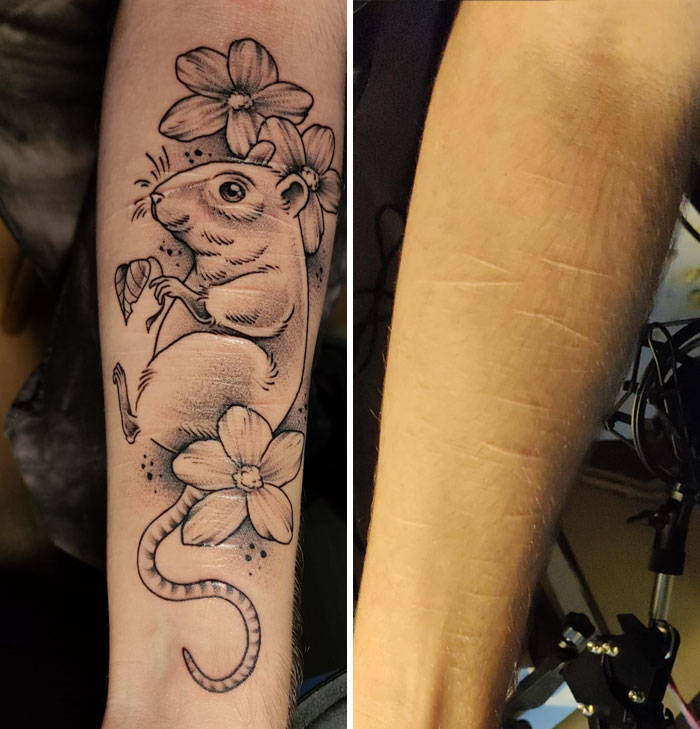
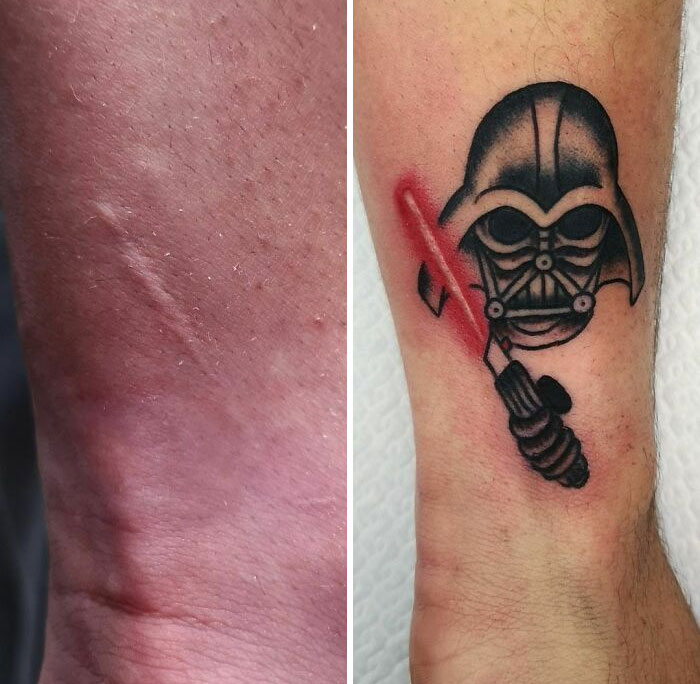
You should expect that lines tattooed over scar tissue may not appear as straight as on undamaged skin. Ink blowout under the skin and uneven line expansion also happen. For these reasons, designs that won’t emphasize these issues are often chosen for covering scars. Scars can be effectively hidden with color filling or shading.
If you have a scar that you want to conceal or incorporate into a new tattoo, it’s essential to schedule a consultation to allow the tattoo artist to see your skin in person and provide guidance on the feasibility of a particular design.
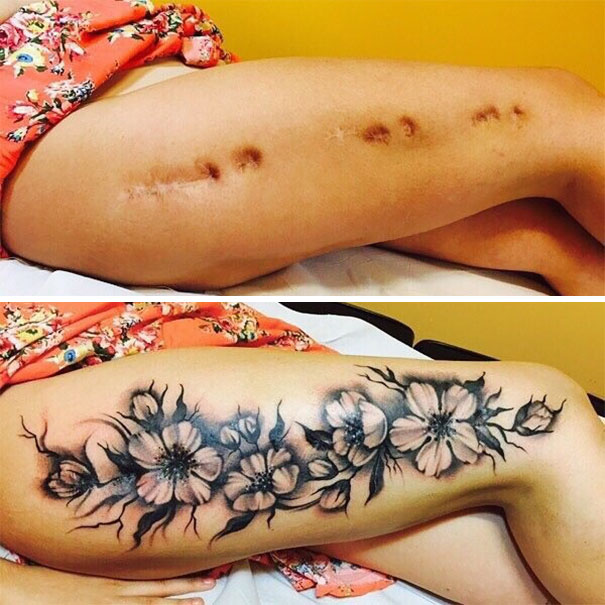
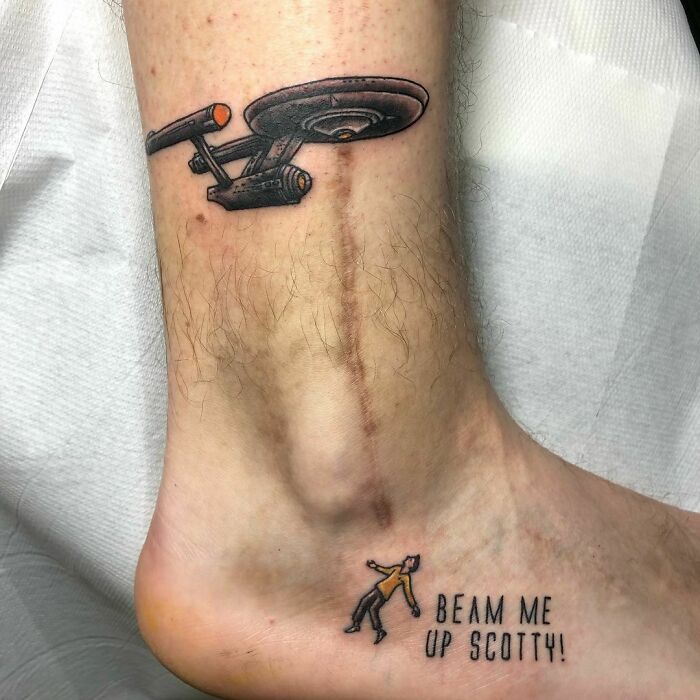
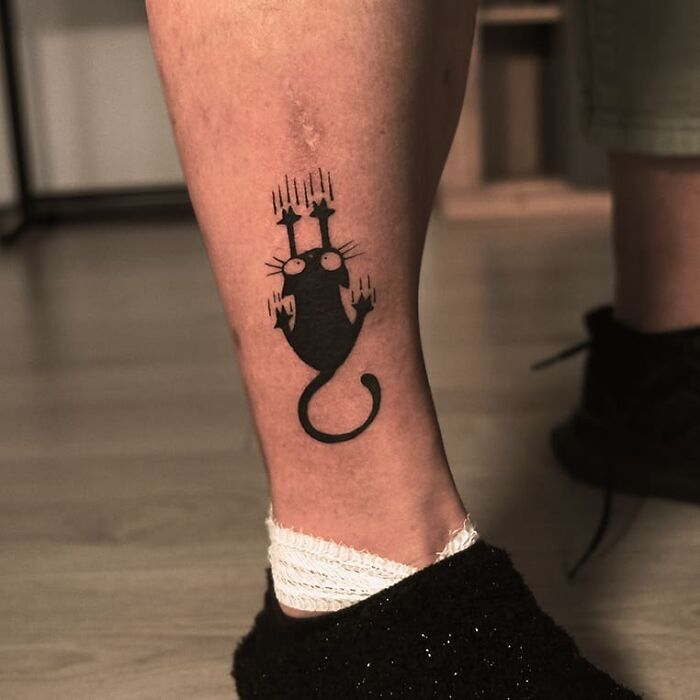
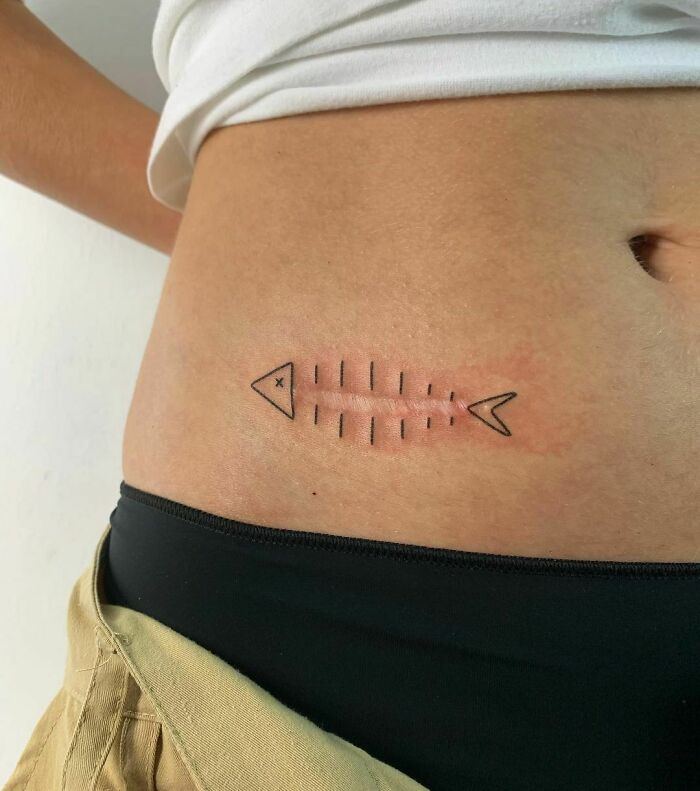
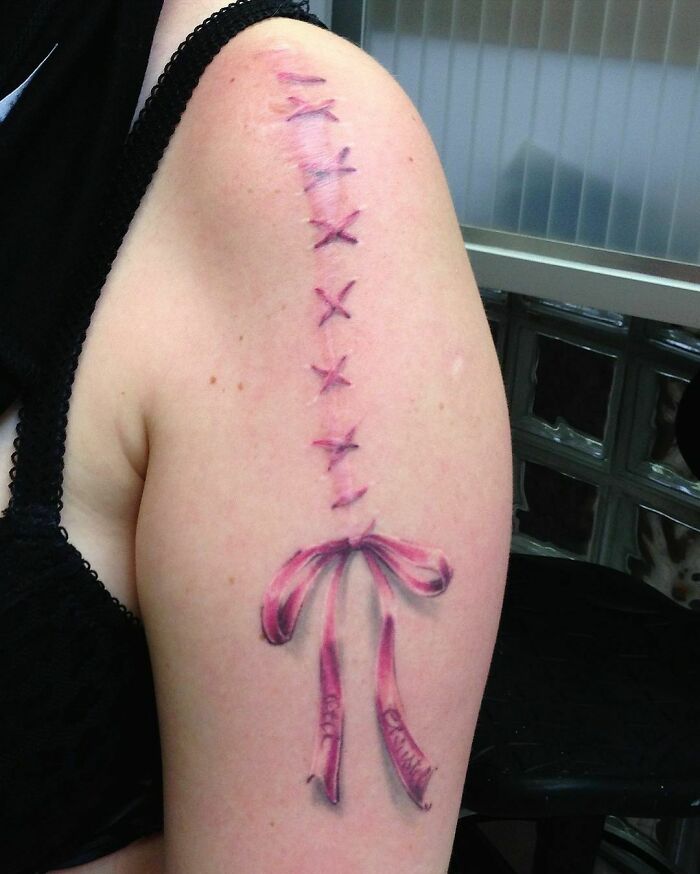
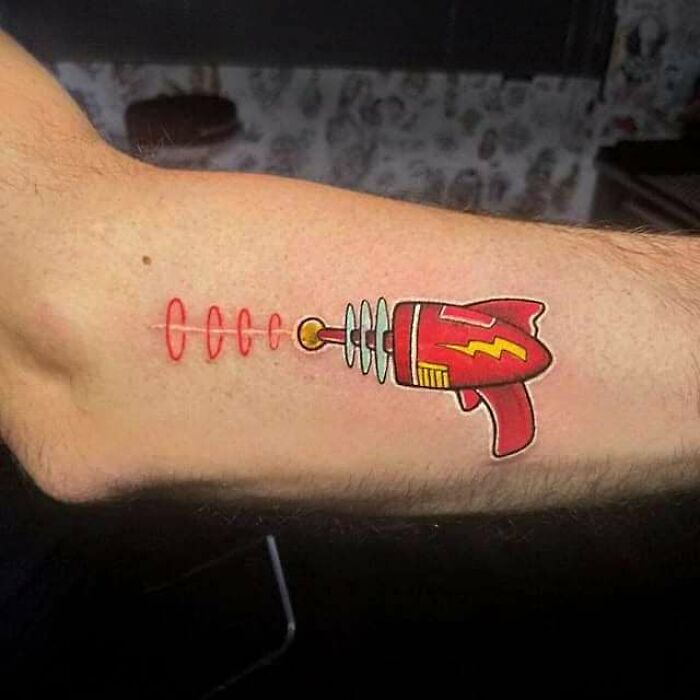
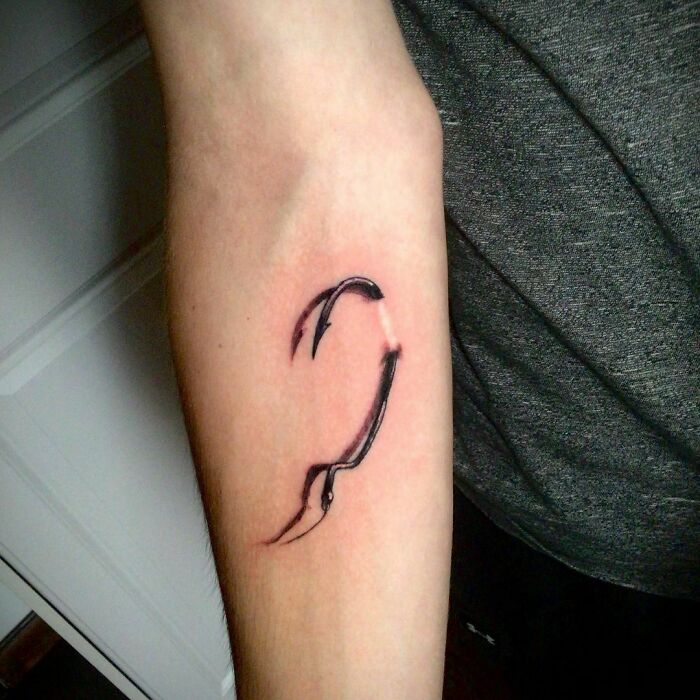
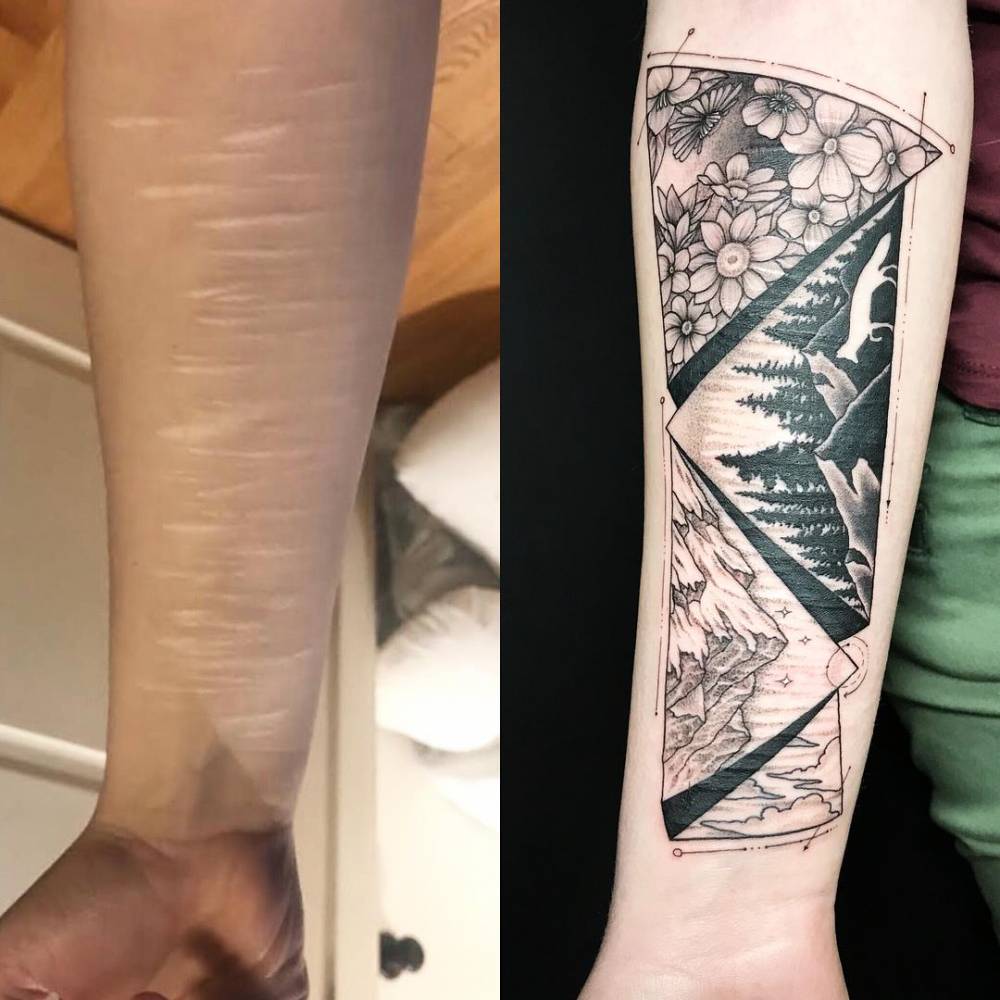
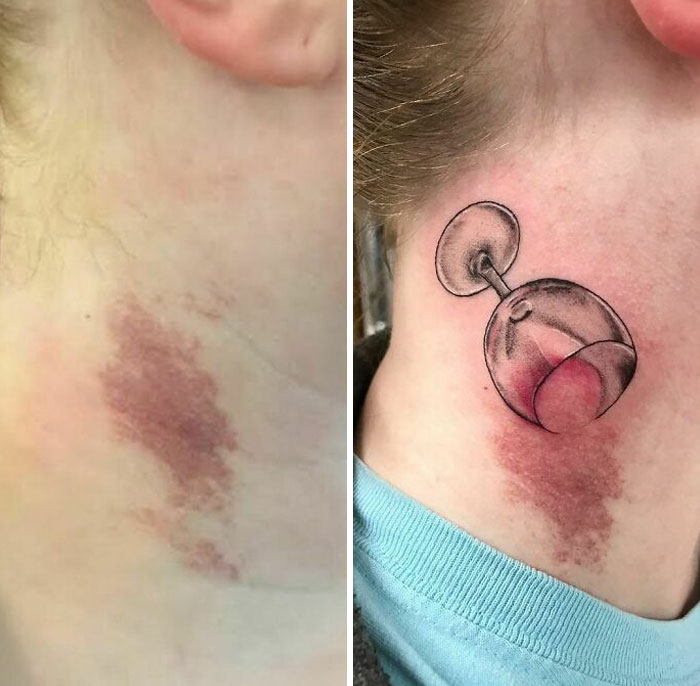
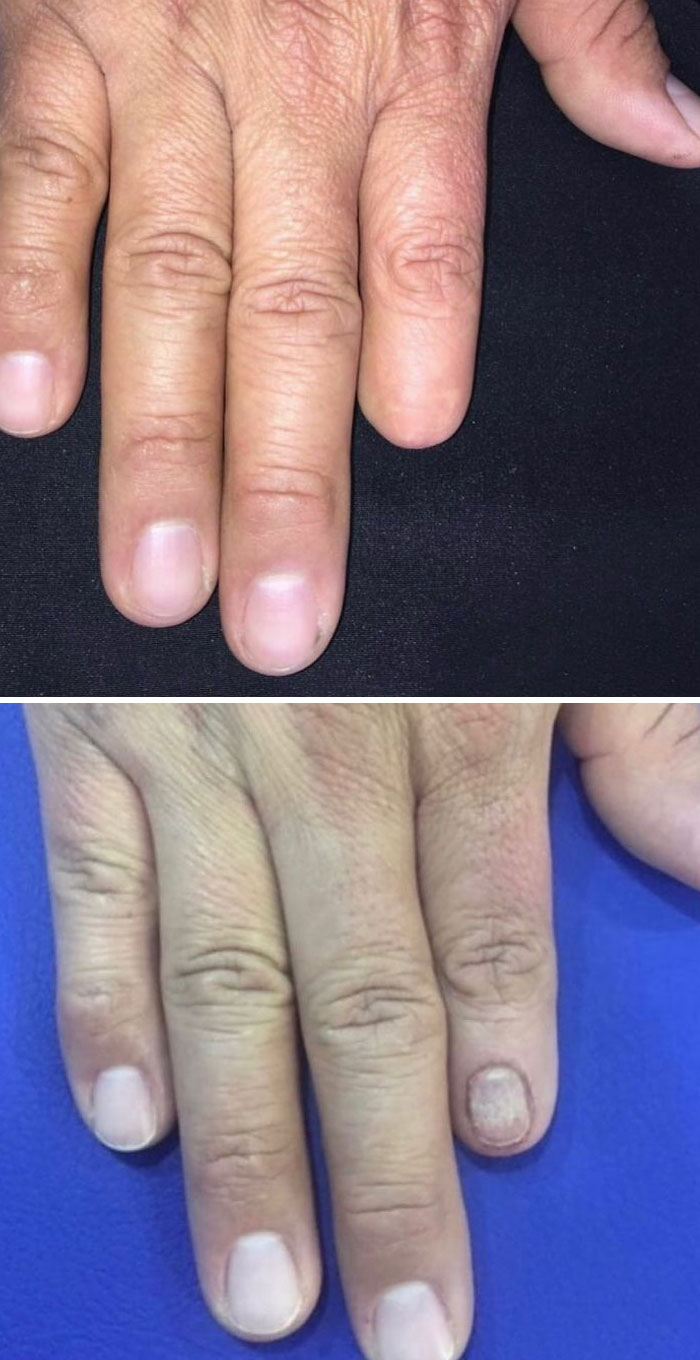
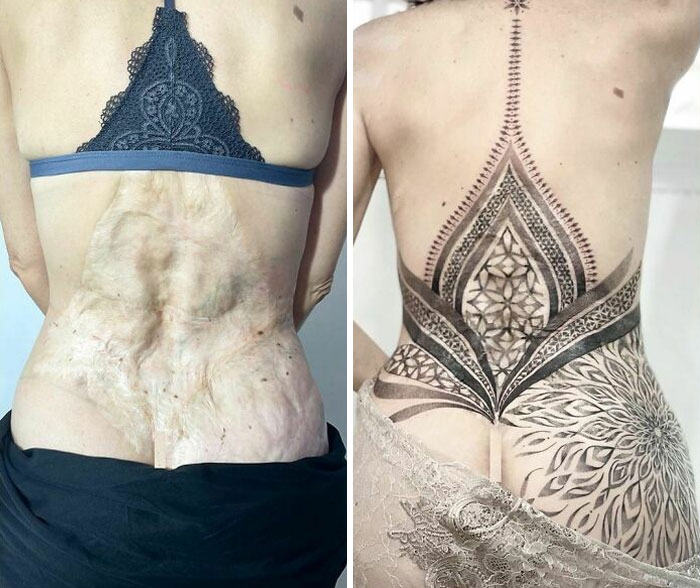
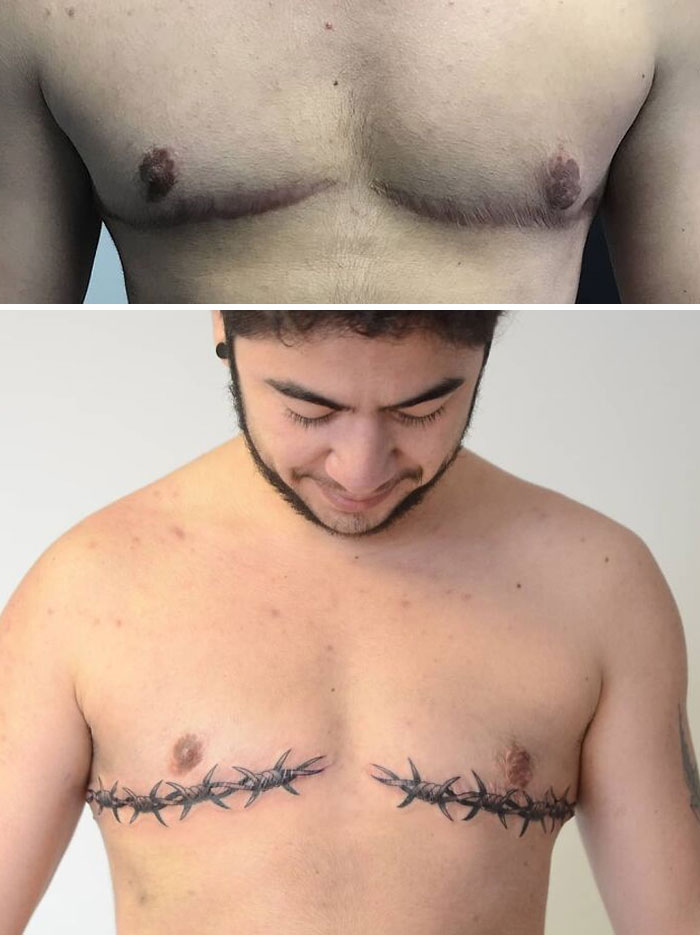
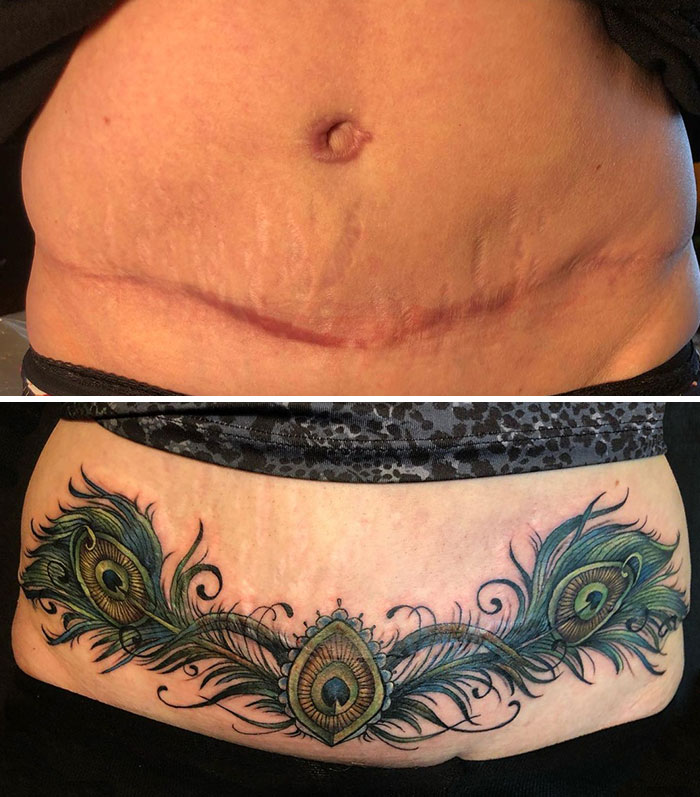
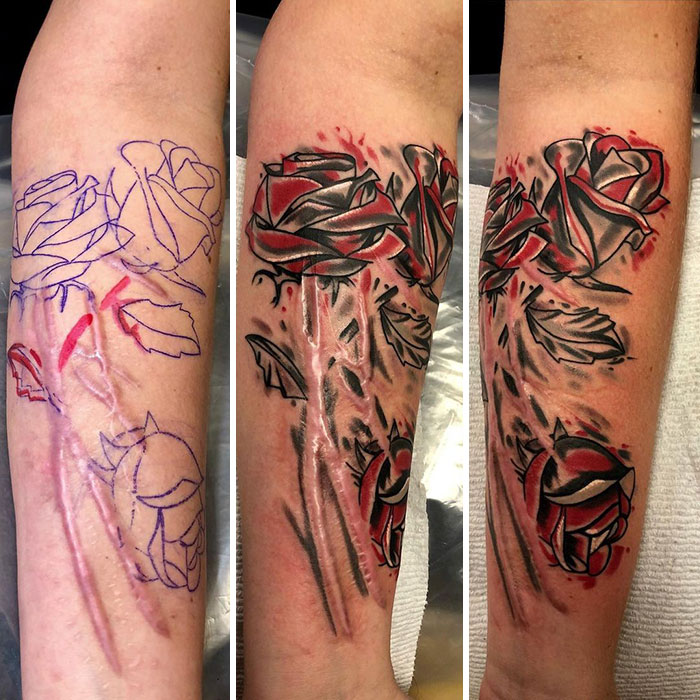
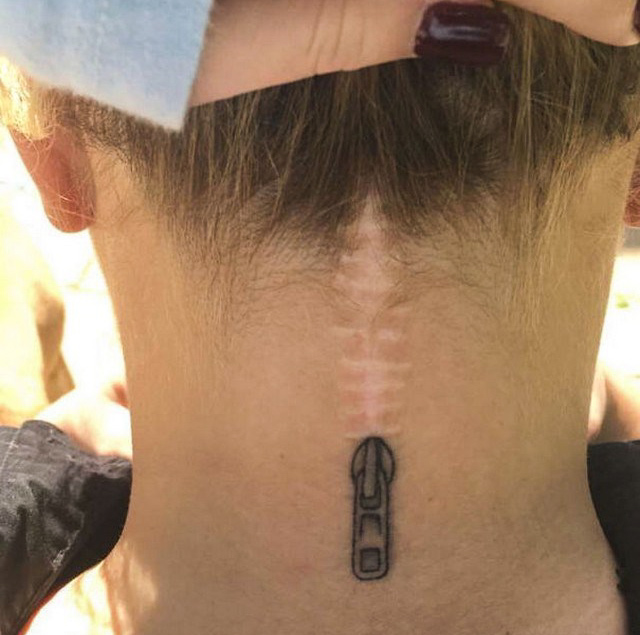
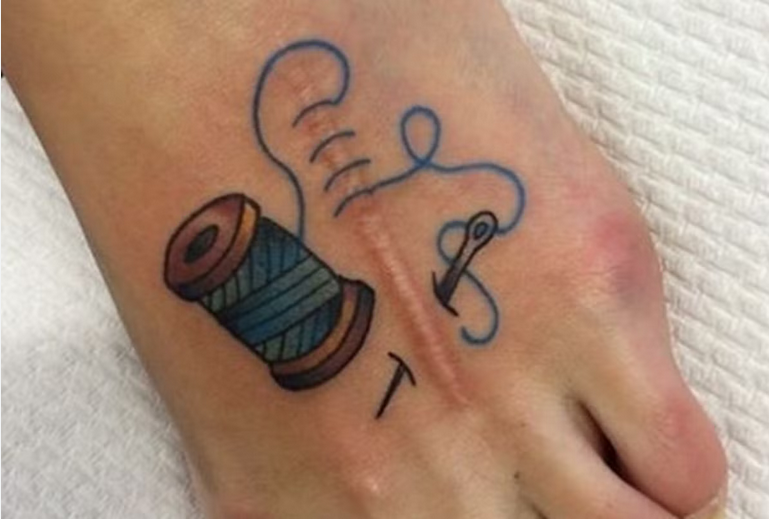
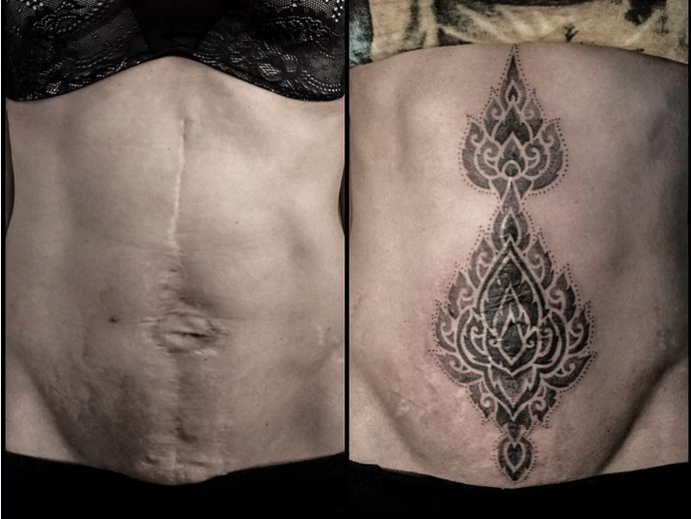
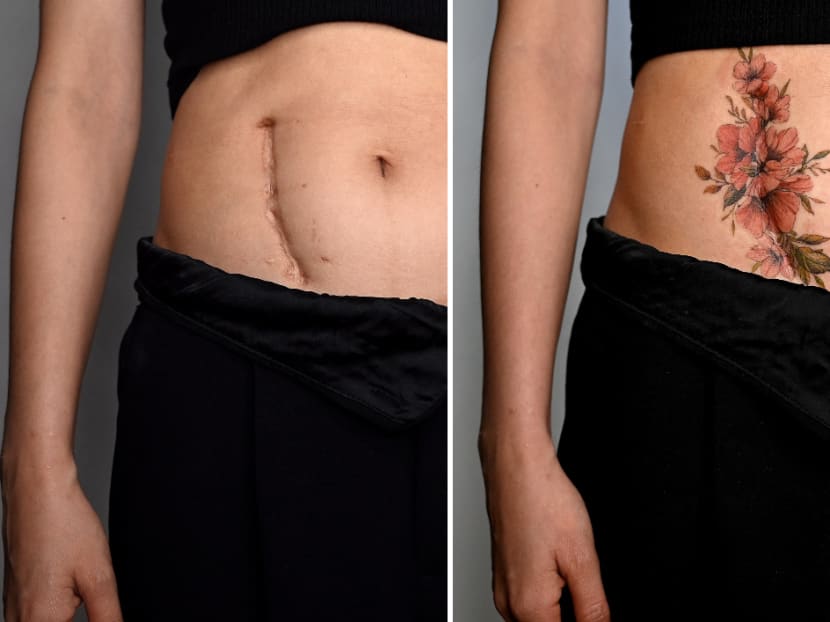
‘Scars are tattoos with better stories.’ For those who see their scars as life trophies, here are a few examples of how tattoos can further embellish them.
(Images were taken from the internet; these tattoos were not done at Octopus).