MATERIALS
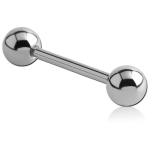
Titanium is the highest quality material for making body piercing jewelry, and it is graded as 23 (Ti6AL4VELI), which is widely accepted for use in the medical field (e.g., pacemakers, bone plates, etc.).
Titanium piercing jewelry is nickel-free, making it suitable for individuals with extreme metal allergies (reactions to metal buttons, belt buckles, cutlery, etc.) and for those who want the highest quality jewelry for their body. Titanium is slightly lighter than steel. You’ll only notice this difference with heavier jewelry, like 4-5mm thick rings or larger. With smaller jewelry, you probably won’t feel the weight difference when wearing it.
Jewelry made of titanium is safe for MRI (magnetic resonance imaging) since it lacks magnetic properties. However, it’s important to check whether the entire piece is made of titanium or just the part that passes through the skin (the attachment to the jewelry may be made of steel). The difference between uncolored titanium and steel is barely noticeable – titanium is slightly darker, but this is hardly visible on smaller pieces of jewelry.
CLEANING
Unlike conventional jewelry like rings, bracelets, or regular earrings, piercing jewelry is typically worn continuously without removal from the body. As a result, it is constantly exposed to external factors (water, cosmetics, dust, dead skin cells, etc.) and bodily secretions (lymph, sweat, blood). Over time, a layer of dirt can form on the jewelry, which may lead to discoloration of the gemstones and a loss of shine.
You can easily clean jewelry with water and antibacterial soap. For more thorough cleaning, we recommend using a soft toothbrush to reach difficult-to-access areas on the jewelry. Before reinserting the jewelry into your piercing, it’s advisable to disinfect it (e.g., with Octenisept).
At Octopus, we offer a professional cleaning, polishing, and anodization service for piercing jewelry. More information is available at the provided link.
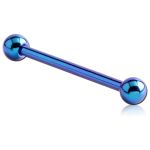
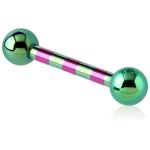
The surface is treated by electric oxidation (anodization) to create colored titanium. The most common colors achieved are yellow, blue, purple, and green. After extended wear, the color may wear off, leaving the jewelry in its original silver color. The color obtained by anodizing titanium does not cause skin discoloration and is approved by the European Union’s directive on nickel emissions for use in piercings.
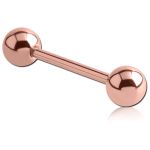
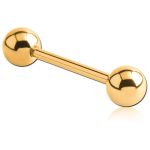
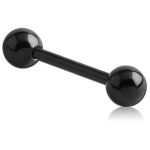
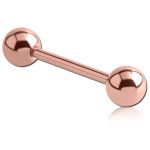
BLACKLINE, ROSE GOLD & GOLD PLATED are names for titanium or steel treated with the PVD process (Physical Vapor Deposition) to create a smooth, even black or yellow surface on the metal, or the color of rose gold, which resembles skin tone.
The PVD surface treatment system has been in existence since the 1980s and is still used today for medical equipment and pacemakers. Allergic reactions to Blackline and gold-plated jewelry are extremely rare. The surface layer does not stay on the jewelry forever, but the color is more durable than that of anodized titanium jewelry.
Titanium jewelry can be sterilized in an autoclave and used as initial jewelry for piercings, regardless of its color.
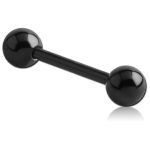
Surgical (implant) steel is a material commonly used in the body modification industry to produce piercing jewelry, in addition to its medical applications. Steel is softer than titanium, making it more frequently used for creating complex ornamentation on jewelry.
Nickel is an element in surgical steel that can cause allergic reactions in some individuals. Careful polishing of the jewelry to a high shine creates a protective layer of chromium oxide, reducing the release of nickel into the tissue. The steel used for making piercing jewelry must meet universally accepted norms and standards. The two most common standards used to determine the quality of implant-grade surgical steel are ASTM F138 and ISO 5832-1. Piercing jewelry is manufactured from 316L surgical steel (L stands for low carbon). This type of steel best justifies its name ‘implant-grade’ – it will never develop surface rust, and it is resistant to constant exposure to saltwater. It contains traces of nickel in its composition, but if you are not allergic to gold and silver, you are unlikely to have an allergic reaction to implant-grade steel. However, if you want jewelry with 0.00% nickel, i.e., one hundred percent safety, choose titanium.
Piercing tools are made from surgical steel 410 (UNS# S41000). It is not uncommon for small areas of surface rust to appear on this type of steel, which can be easily removed through cleaning in an ultrasonic bath prior to the sterilization process.
The Blackline, Rose gold, and Gold plated lines are also available on steel jewelry. Cleaning the steel jewelry is identical to cleaning titanium jewelry.
Jewelry made from surgical steel can be sterilized in an autoclave and used as initial jewelry for piercings, regardless of its color.
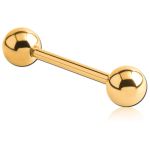
Gold used for making piercing jewelry should not be of lower quality than 14K or 18K (58% to 75%). Allergies to gold are rare but do exist, so gold jewelry worn in the body should be of high purity and quality. 24K gold is not used for making piercing jewelry because it is too soft and can be easily damaged. Such damage can irritate the channel, especially in the case of a new piercing.
For this reason, we usually recommend wearing a titanium base (the part of the jewelry that passes through the piercing channel) and gold attachments, especially in positions where the jewelry can be damaged (e.g., lip or tongue – there is a possibility that the jewelry could be bitten).
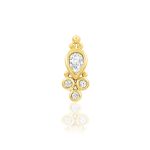
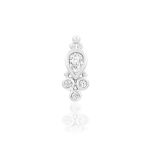
Due to its softness, gold is much easier to shape than titanium, allowing for the creation of more delicate and complex jewelry designs. Thanks to the increasing popularity of gold in the piercing industry, a new jewelry attachment system, the threadless jewelry, has been developed. The gold attachment has a thin pin that gently bends when attaching it to the base. Attachments with a diameter of 4mm or more still use threading because their size and weight could cause the thin pin of the threadless model to break.
CLEANING
Alloys are used for making gold piercing jewelry because pure gold is too soft. Therefore, there is a possibility that the jewelry may darken with prolonged wear. In such cases, it should be cleaned and polished (a service offered at Octopus). If you only want to clean the jewelry from dirt that has accumulated from wearing, you can soak it in warm water with a little dishwashing detergent for 15 minutes to break down dead skin cells on the jewelry. For more thorough cleaning, you can use a soft brush. Rinse the jewelry thoroughly with lukewarm water (be careful not to let it go down the drain) and dry it with a paper tissue.
Some reputable manufacturers of gold piercing jewelry are Anatometal, LeRoi, Auris, Junipurr, Shanga gioielli…
With some manufacturers, custom orders for jewelry are possible, allowing you to choose the gold purity (14K or 18K), color (yellow, white, or rose gold), size, and type of stone (zircon, semi-precious stones, etc.).
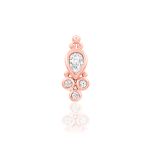
Bioplast is a biocompatible material, which means it does not cause allergic reactions when worn.
It is a lightweight flexible plastic that can be sterilized in an autoclave. It is not visible in X-rays, making it the best material for piercing retainers (jewelry used to keep the piercing channel open in situations where you should be without jewelry, e.g., X-rays, MRI, surgeries, etc.).
The jewelry can be shortened as needed – excess material is cut off, and a new thread is created. This is practical for piercing positions that swell (e.g., lips) because a longer Bioplast bar is initially left in place, and after a few days when the swelling subsides, the jewelry can be shortened without removing it from the piercing channel.
The drawback of using Bioplast in oral piercing positions is that it can be easily bitten or damaged, which can lead to further complications.
Bioplast is not as durable as steel or titanium, and it wears out and deteriorates with use. Depending on the location on the body, Bioplast jewelry needs to be replaced with new jewelry every few months. It wears out especially quickly on the tongue or lip due to constant exposure to saliva, food, oral cleaning products, etc.
It is available in different colors: white, orange, red, pink, purple, light and dark blue, green, gray, and black. It can also be semi-transparent or glow in the dark after exposure to a light source.
CLEANING
Due to the relatively rapid wear and low cost of Bioplast jewelry, we recommend replacing it with new jewelry every few months when worn frequently or for extended periods. Cleaning can potentially result in microscopic damage to the jewelry that may lead to irritation of the piercing.
Retainers (jewelry worn only occasionally and for a short period) can be cleaned with lukewarm water and antibacterial soap, without the use of brushes.
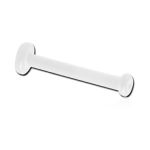
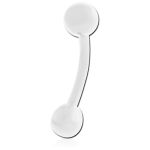
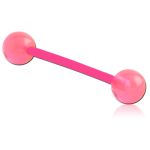
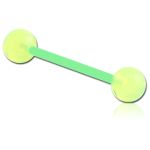
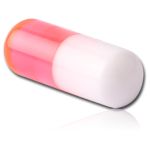
Acrylic is a plastic material commonly used in the piercing industry to make inexpensive jewelry for stretched earlobes and accessories (such as beads, spikes, pills, etc.).
This material is not suitable for use with a new piercing, and it cannot be sterilized in an autoclave as it may melt or change color.
Jewelry entirely made of acrylic (e.g., plugs and tunnels for stretched earlobes) can collect bodily fluids and small bits of skin in the tiny pores on its surface, so it needs to be cleaned regularly and carefully. People with sensitive skin may experience allergic reactions to acrylic.
CLEANING
It is not recommended to use strong disinfectants on acrylic jewelry to avoid material damage. The jewelry can be cleaned with lukewarm water and antibacterial soap.
Acrylic accessories (such as beads, etc.) are not in direct contact with the piercing channel (they are on the skin’s surface, not inside the skin), so allergic reactions in healed piercings are very rare.
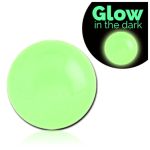
Acrylic jewelry is available in a wide range of colors, and there are also glow-in-the-dark and UV variants.
Different types of stones are used to make jewelry for stretched earlobes.
Unlike other natural materials (wood, horn, bone), shaping stones can be challenging as they are prone to damage, so simple plugs and tunnels are the most common stone jewelry pieces. Regardless, stone jewelry is available in a wide range of unique color variations, and almost every piece is one of a kind due to the specific nature of the stone from which it is made.
Stones are heavy, so care should be taken to prevent the jewelry from falling out of the piercing channel to avoid damage.
CLEANING
The jewelry can be easily cleaned with lukewarm water and antibacterial soap. It does not require special care, unlike materials like wood.
Some of the most common types of stone for making plugs and tunnels include moonstone, amethyst, obsidian, hematite, onyx, agate, labradorite, howlite, rose quartz, etc.
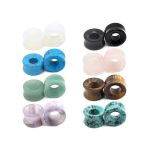
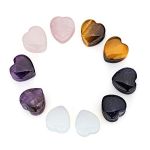
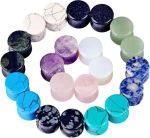
Wood is a material that is often used to make jewelry for stretched earlobes.
Wooden jewelry is comfortable to wear even in low winter temperatures (it doesn’t get as cold as metal), it’s lightweight, doesn’t slip out of the earlobes, and due to its porosity, it allows the skin to ‘breathe.’ Therefore, even after extended wear, an unpleasant strong odor that stretched earlobes can develop when jewelry is not regularly cleaned is not experienced.
CLEANING
It’s necessary to regularly and properly maintain the jewelry, as otherwise, it can become dry and lose its luster and may crack. This is done by occasionally applying mineral oils or jojoba oil (e.g., once a month) and avoiding exposure to water. If the wood loses its luster from wear, it can be coated with olive oil. Keep in mind that wood can darken from excessive use of oil or from prolonged wear. Wooden jewelry should not be submerged in water to prevent material expansion.
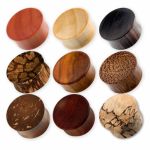
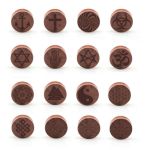
Due to its ease of processing, it’s possible to create plugs and tunnels with various additions of metal, stone, zirconia, and/or other organic materials. Wood can be carved and laser-engraved, resulting in very precise and detailed ornamentation on the jewelry. Different types of wood are used to make jewelry in various colors and shades, ranging from very light (almost white) to black.
Wood cannot be sterilized in an autoclave and is porous, so it should not be used in new piercings or stretched earlobes during the healing process.
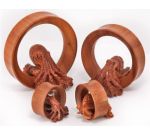
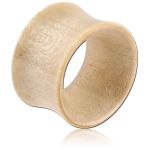
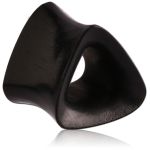
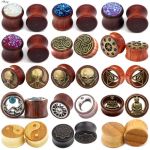
Biological organic materials in the piercing industry are used exclusively for making jewelry for stretched earlobes and are most commonly used in cultures where piercing is a tradition.
Bone and horn are easy to shape, can be processed to achieve a smooth and shiny surface, and allow the skin to breathe, reducing the likelihood of an unpleasant odor developing in stretched earlobes. It is necessary to regularly care for the jewelry to prevent drying out or cracking.
The quality of organic jewelry is essential because poorly cleaned materials used in jewelry production can transfer bacteria to the wearer’s body. Poor-quality jewelry may have scratches that harbor bacteria or inadequate finishing that results in an uneven jewelry surface.
CLEANING
To clean bone or horn jewelry, a microfiber cloth dampened with plain water with a little antibacterial soap added is used. Strong disinfectants are not recommended for these types of materials. After cleaning, the jewelry should be thoroughly dried. Once a month, it can be coated with jojoba oil to maintain its shine. Bone jewelry may yellow over time; this is a normal occurrence.
Organic materials should not be autoclave-sterilized because they will be destroyed, so they are not suitable for use in new piercings or stretched earlobes during the healing period.
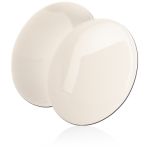
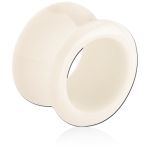
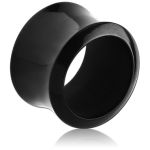
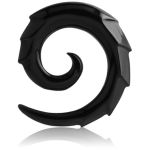
Silicone is a soft and highly flexible rubber commonly used to make jewelry for stretched earlobes or various attachments for ball jewelry.
Silicone jewelry cannot be sterilized and is not suitable for wearing in new piercings (especially for stretching earlobes).
The material is biocompatible; allergic reactions to silicone are rare, but skin irritation can occur because silicone adheres well to the skin, which can pose a hygiene issue due to reduced cleanliness and oxygen flow. Therefore, it is not advisable to stretch earlobes using larger silicone jewelry. With each stretching, the piercing channel is injured, and silicone that ‘sticks’ to the wound prevents the drainage of lymph and blood. Moreover, if the silicone is of low quality, the situation can become even worse. High-quality silicone jewelry has a parylene coating, which reduces the jewelry’s stickiness (a recommendation for the manufacturer: Kaos Software).
CLEANING
Silicone jewelry can be easily cleaned with antibacterial soap and water. After cleaning, it should be rinsed thoroughly and air-dried. The use of strong disinfectants is not recommended as they can dry out the silicone.
Silicone is extremely lightweight, and due to the material’s high flexibility, it can be worn during sleep. It can be produced in sizes ranging from 3mm to 50mm or more. It is available in various colors and can be combined with other materials (e.g., steel).
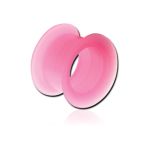
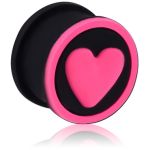
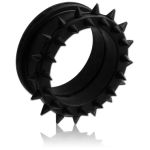
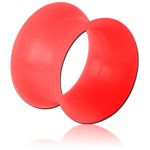
Glass has been used for making jewelry for thousands of years – jewelry made of glass was found in ancient Egyptian tombs.
If properly shaped and manufactured, glass is an excellent material – strong, comfortable to wear, and safe for the body. However, lower-quality glass that is not encased within a metal frame can easily break.
It is not suitable for wearing in the mouth (e.g., glass tongue rings). Glass is most commonly used to make jewelry for stretched earlobes, and besides classic plugs and tunnels, various interesting shapes can be crafted (a recommendation for the manufacturer: Gorilla Glass).
Glass can be sterilized in an autoclave, but the heat can cause breakage in lower-quality jewelry.
CLEANING
Jewelry can be easily cleaned with plain water and antibacterial soap. It is recommended to store jewelry in fabric pouches (each piece separately) to reduce the risk of damage.
Glass can be produced in various colors, it can be either smooth or ‘frosted’ (obtained through sandblasting), and it can be combined with other materials, most commonly steel.
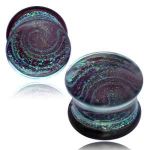
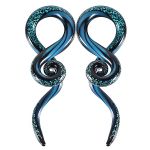
Silver is not recommended for wearing in piercings because blood, sweat, and other bodily fluids, as well as antiseptics and other piercing aftercare products, can lead to the oxidation of silver. This means that silver jewelry will tarnish and start releasing substances into the body that can cause allergic reactions, and the skin around the jewelry will permanently turn black or gray (argyria – a condition caused by inadequate exposure to the chemical properties of silver; black discoloration of the skin that cannot be removed).
Processed silver jewelry can achieve a high shine, and in some parts, a black silver color can be obtained, creating a nice contrast. However, silver is one of the most common causes of nickel allergies!
Silver is not sterilized in an autoclave.
In the piercing industry, silver is used to make charms for belly button jewelry and certain jewelry attachments that are not in direct contact with the piercing channel. The part of the jewelry that passes through the actual channel is always made of implant-grade materials (steel, titanium, or bioplast).
The composition of the silver determines how quickly the material tarnishes. 100% pure silver is rarely used because it is extremely soft. ‘Sterling silver’ is a silver alloy with another metal, such as copper. Alloys are created to improve the properties of a particular material, such as strength. If you see the mark ‘925’ on the jewelry, it means the material is 92.5% silver and 7.5% another metal.
CLEANING
Silver jewelry should be gently and carefully cleaned to avoid damage. If the jewelry has tarnished, you can soak it in warm water with a little dishwashing liquid for 5 minutes. Hard-to-reach parts of the jewelry can be cleaned with a very soft toothbrush or brush. The jewelry needs to be thoroughly rinsed and dried.
If manual cleaning doesn’t restore the lost shine to the jewelry, it needs to be polished. This service is available at Octopus, more information at the link.
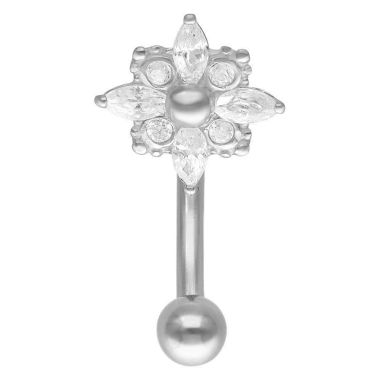
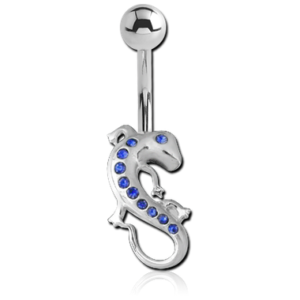
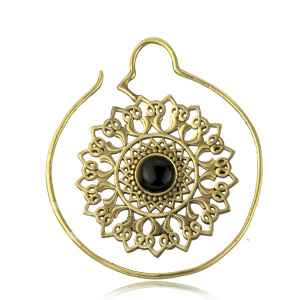
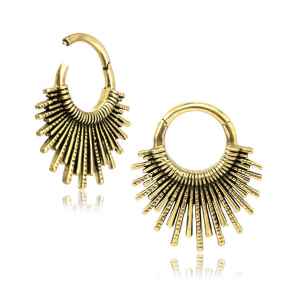
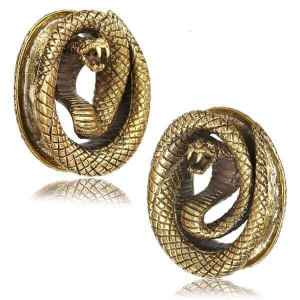
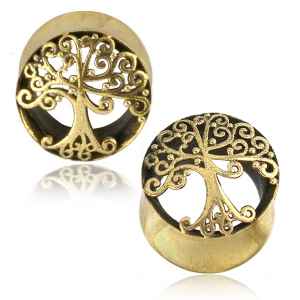
Brass is an alloy of copper and zinc, and in jewelry production, it is primarily used because of its visual resemblance to gold and its ease of shaping. Brass is used to make jewelry for traditional earlobe piercings, as well as jewelry for stretched earlobes (plugs/tunnels, ear weights, etc.).
We do not recommend using brass jewelry for new or healing piercings, or if the piercing is inflamed. Also, it is not recommended for long-term continuous wear without removing the jewelry because it will darken over time and may irritate the piercing.
Brass jewelry will turn brown (oxidize) if exposed to moisture (water, sweat, natural skin oils), so it is important to keep it dry.
CLEANING
Jewelry should be cleaned carefully and gently to avoid damage. At Octopus, we offer a jewelry polishing service, more information at the link. On the internet, you can find many methods for cleaning brass jewelry using lemon juice, vinegar, or baking soda. Some of these methods will result in a significant change in the color of the jewelry. If you decide to clean the jewelry yourself, we recommend trying a specific method on a less noticeable part of the jewelry.
Individuals prone to metal allergies are very likely to have an allergic reaction to brass jewelry.