JEWELRY MEASUREMENT
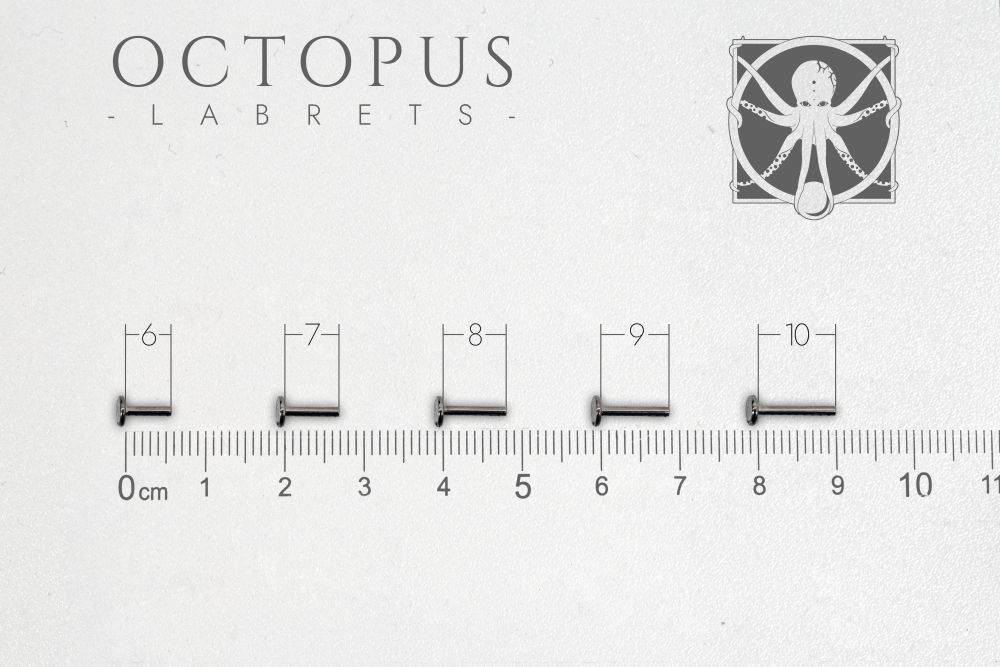
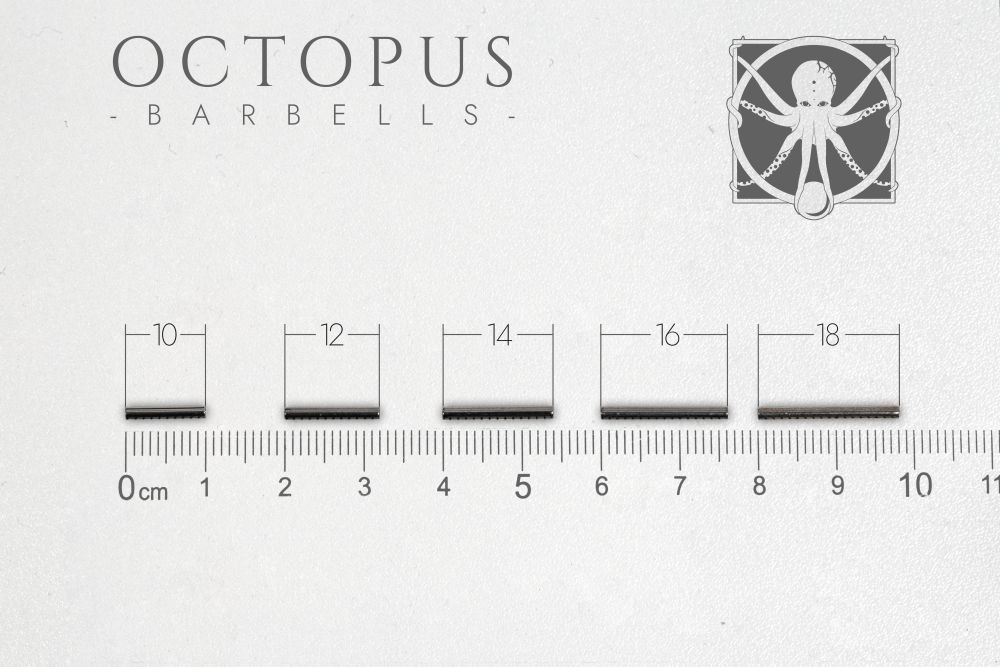
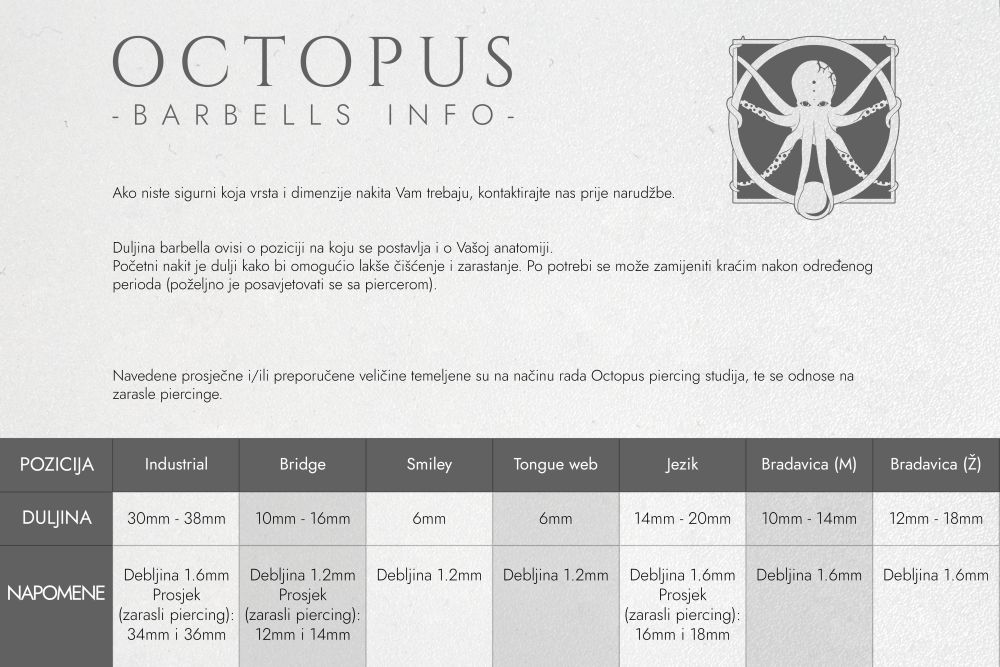
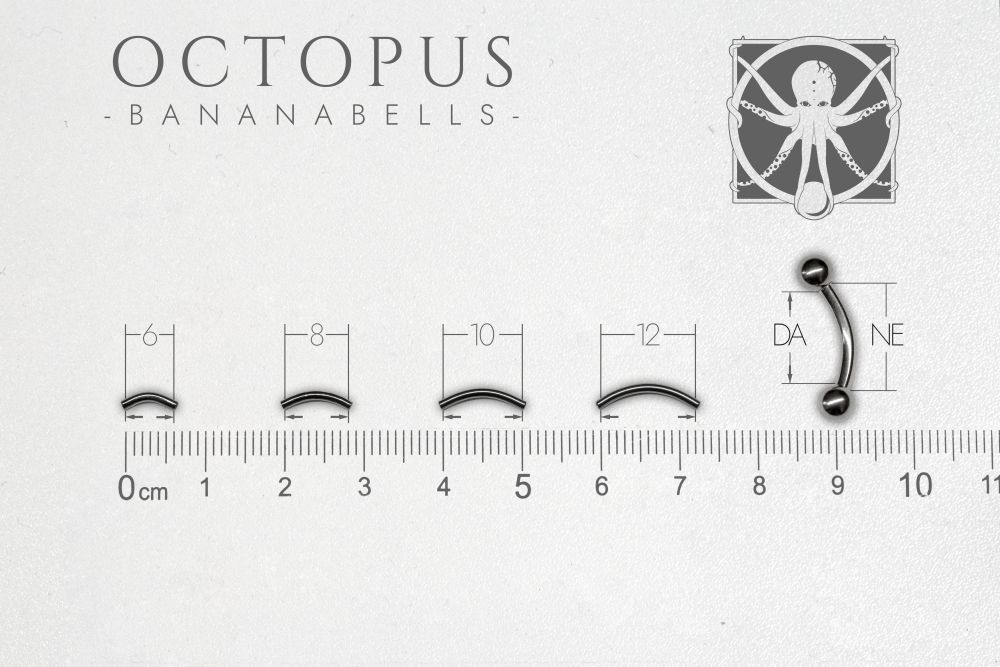
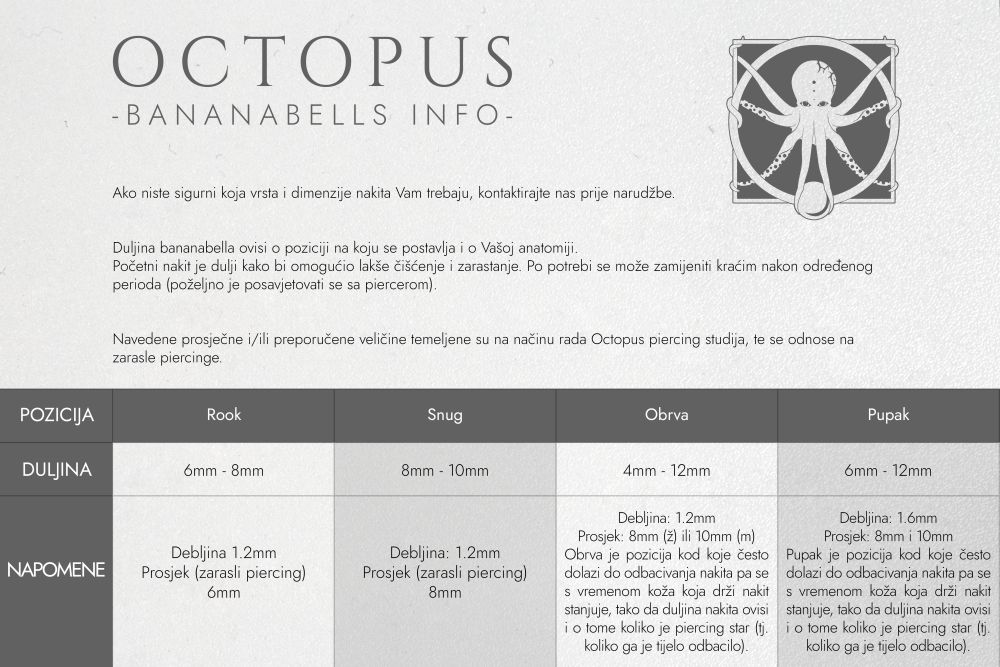
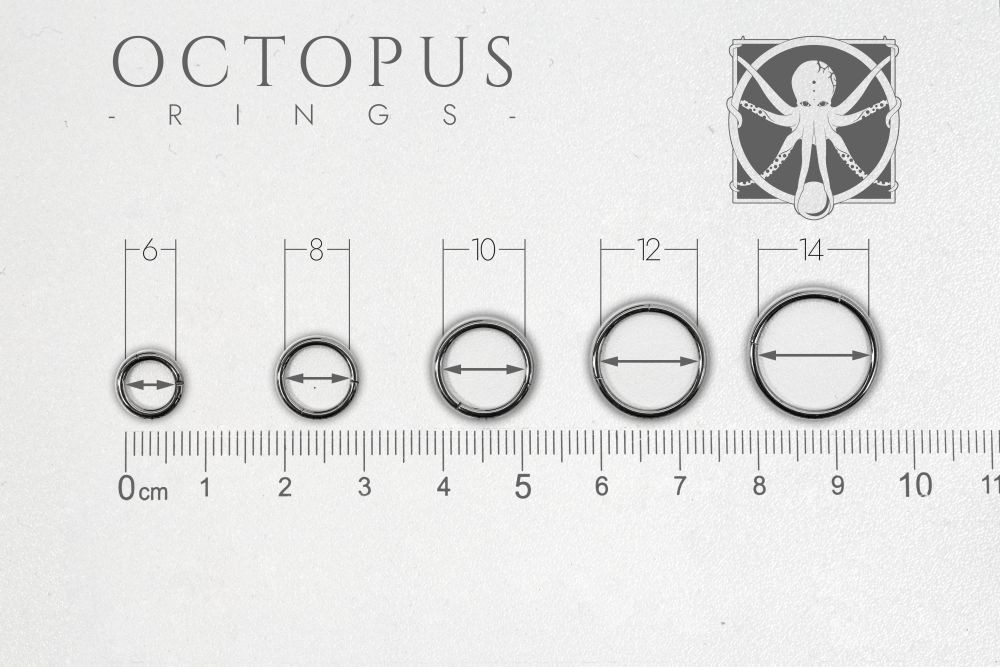
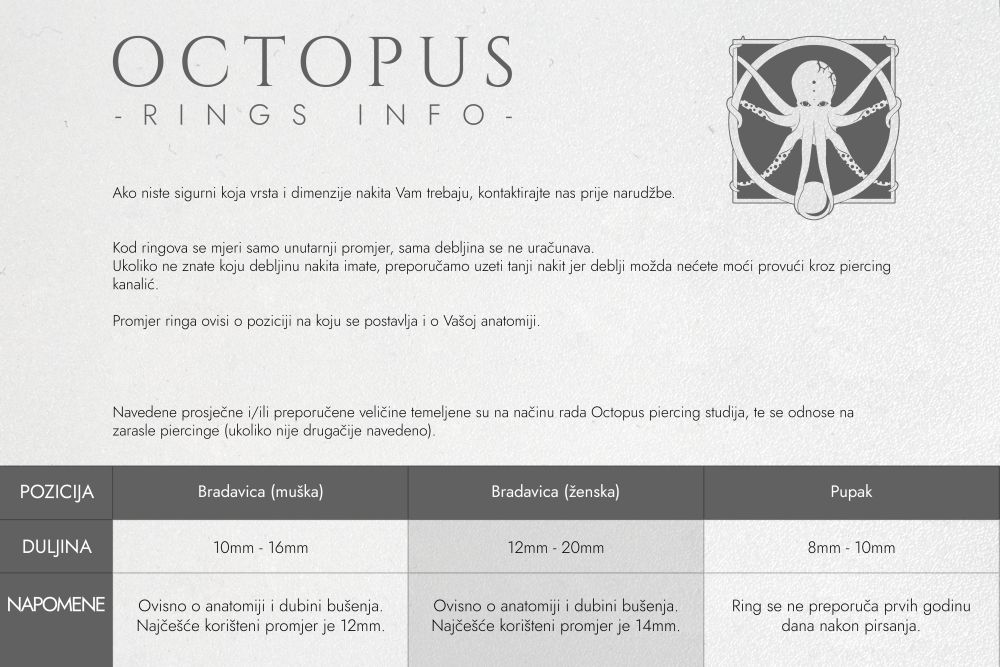
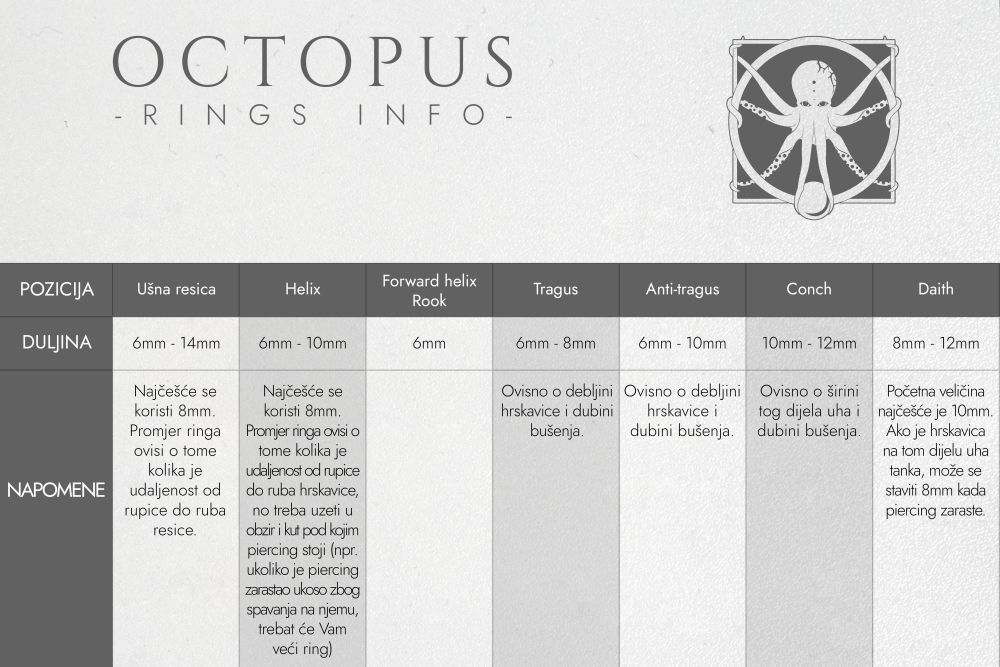
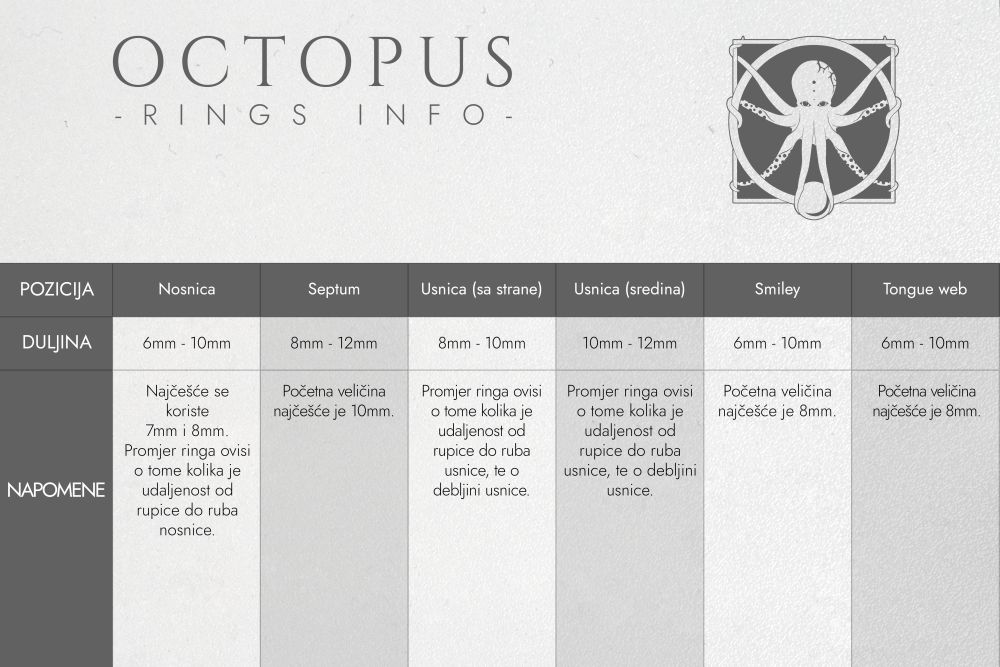
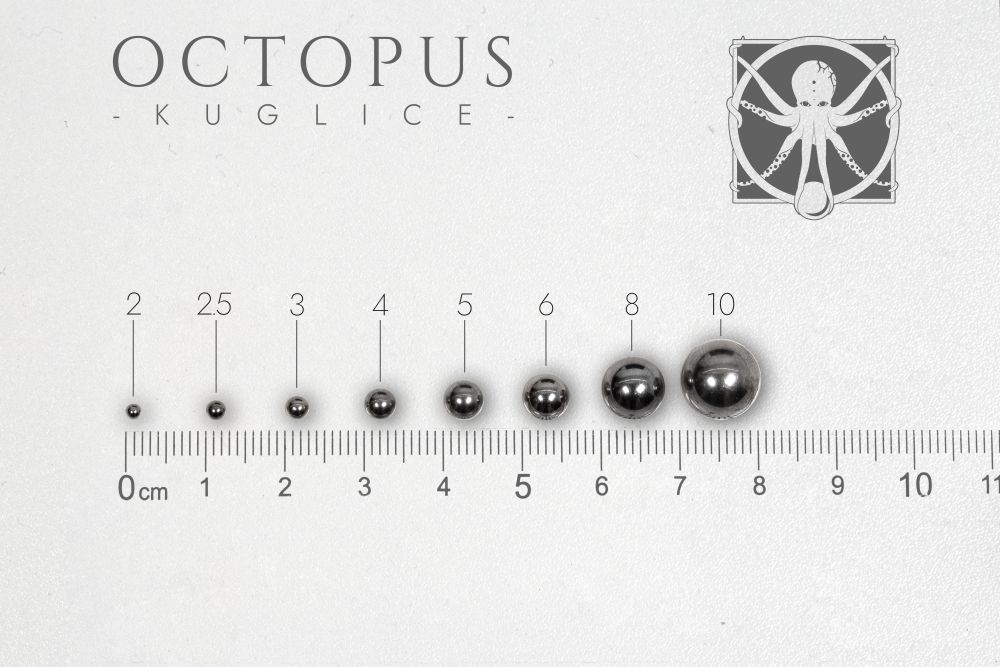
When purchasing specific piercing jewelry, it is essential to know the correct dimensions you need. Think of it like buying shoes – if you get ones that are too small, it leads to a range of problems, and if they are too large, a different set of problems arises. If you buy jewelry that is too short, it may put pressure on the piercing, leading to swelling and possible ingrowth of the jewelry into the tissue. If you purchase jewelry that is too large, it won’t look aesthetically pleasing and increases the likelihood of snagging on the piercing.
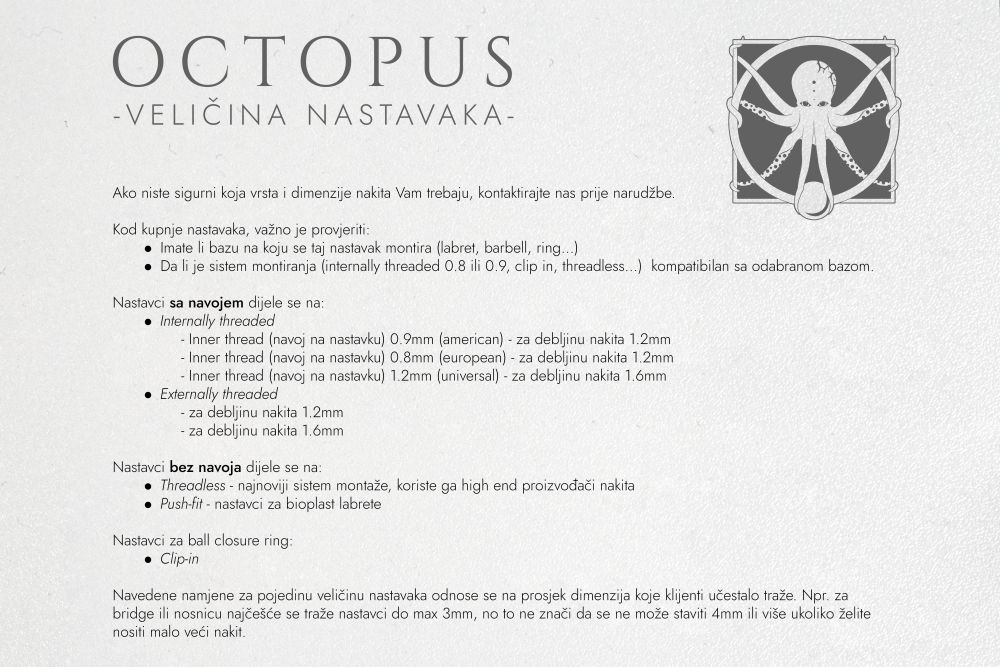
In addition to basic aspects like thickness, length, or diameter of the jewelry, for some designs (especially with labrets and attachments), you need to pay special attention to the threading (internally threaded, externally threaded, threadless). You can find more information about jewelry types and threading in the provided link.
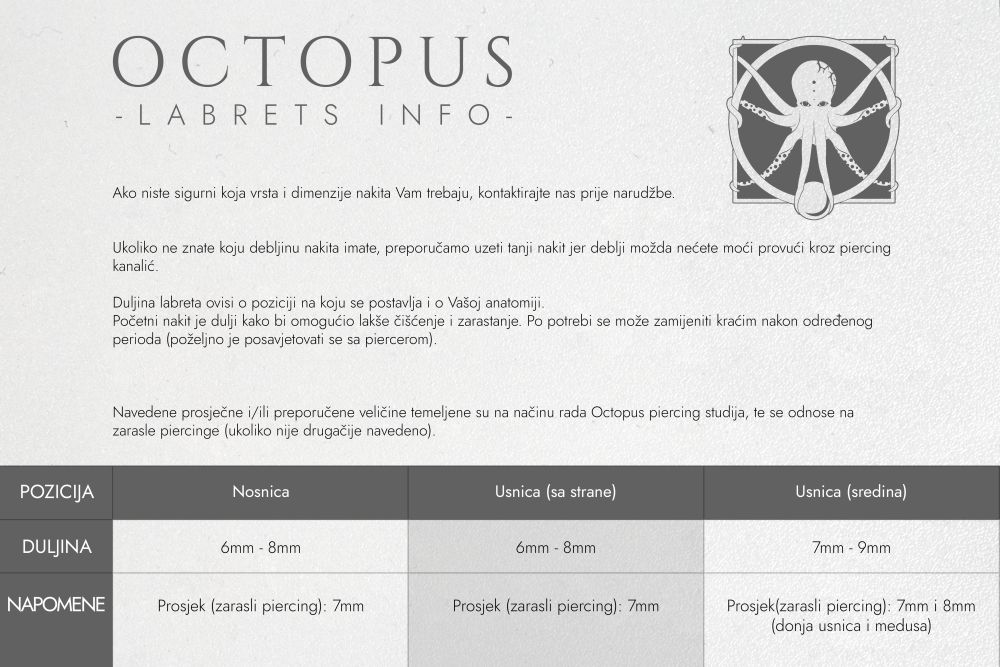
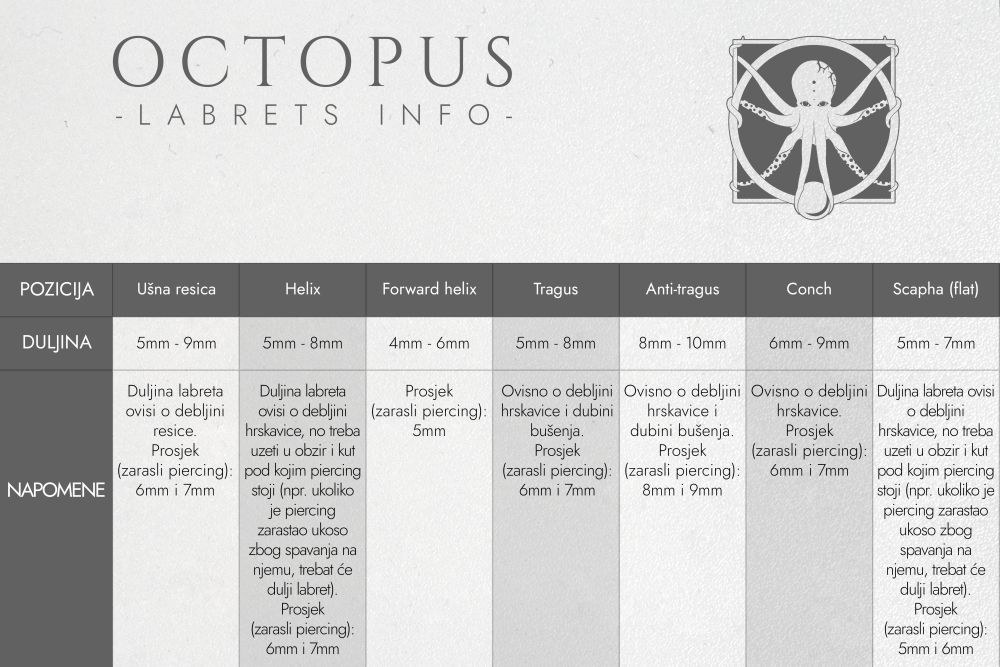
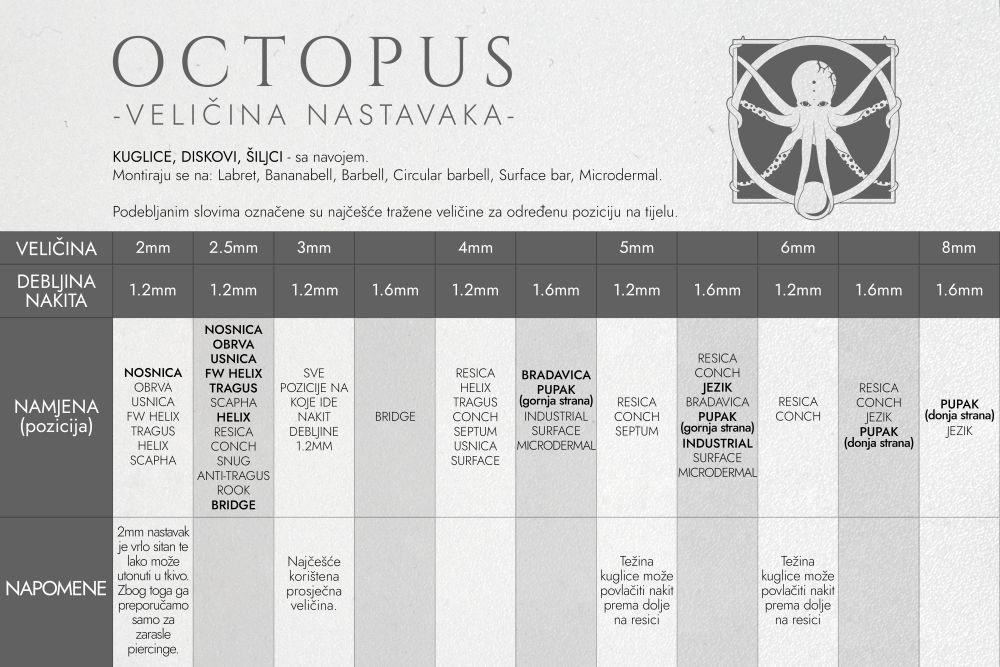
Certain piercing positions may have ‘standard’ jewelry dimensions, but these are often the most common measurements. For instance, a tragus piercing typically uses 1.2mm thick jewelry, with a length of 7-8mm (at the time of piercing), which can be replaced with shorter jewelry after the healing period if the anatomy allows (e.g., 6-7mm).
Jewelry dimensions can vary depending on your anatomy and the individual piercer. There are no formal schools for this profession, and knowledge is typically passed down from mentor to apprentice, so different piercers may use different jewelry thicknesses and lengths for piercing.
If you’re buying jewelry as a gift and don’t know the exact dimensions the person needs, sometimes it’s better to opt for a gift certificate. That way, the recipient can visit the studio in person, and the piercers can assist them in selecting the right model and precise dimensions.