SKIN
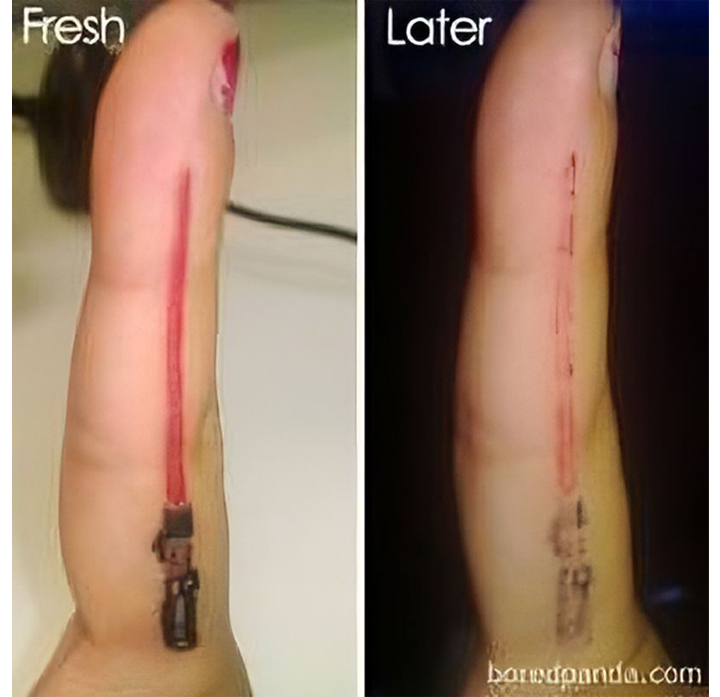
The skin is a living organ that ages and changes over the years. Along with it, your tattoo will also change.
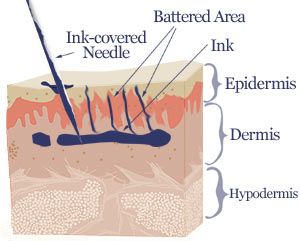
Tattooing is a process in which rapid needle punctures open the superficial layer of the skin to introduce tattoo ink into the dermis. The term “tattoo healing” actually means that a new layer of skin forms over the tattoo ink (the epidermis heals where it was damaged). This new layer of skin is initially very thin and sensitive, and it can easily burn in the sun. Therefore, you should avoid exposing your tattoo to the sun and tanning beds for the first month after getting inked. Afterward, you should use sunscreen with an SPF of 30+.
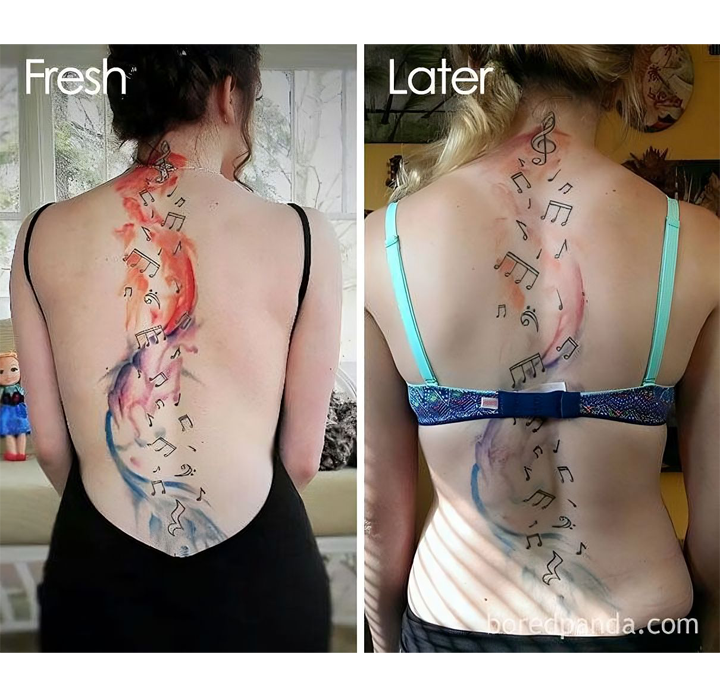
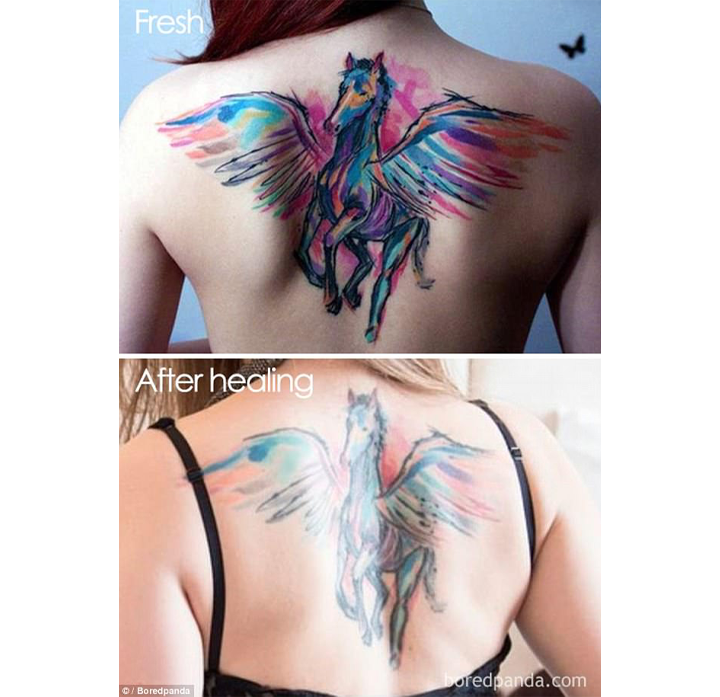
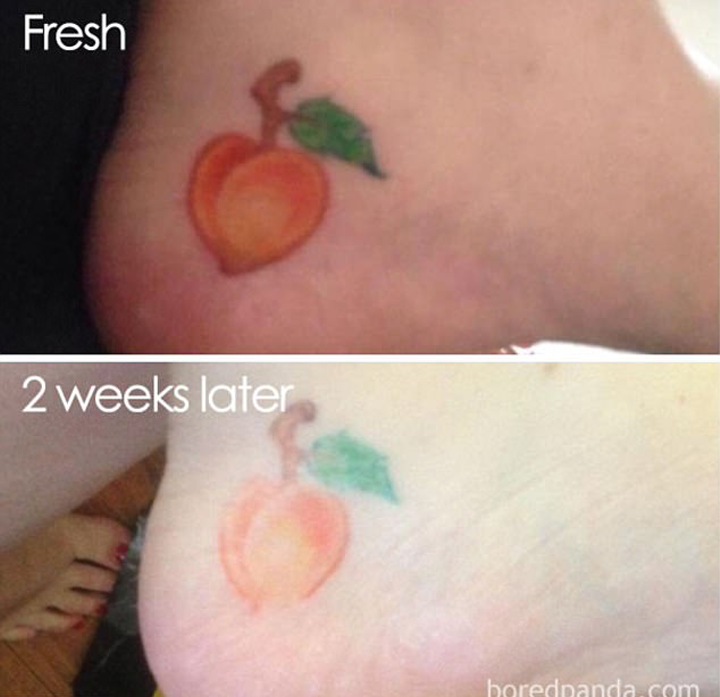
The skin is not transparent but has its natural pigment. Some people have lighter skin, while others have darker skin. After getting a tattoo, the ink will appear very intense initially, but it will gradually fade over time. This happens because the new layer of skin that forms during the healing process becomes firmer, and the natural skin pigment visually blends with the tattoo ink. A good example is white tattoo ink, which can become very faint after the healing period, especially in people with darker skin tones, or it may take on a yellow/brown hue in individuals with lighter skin who tan in the sun. Colors similar to your skin tone can also become “invisible” more quickly (e.g., lighter shades of yellow, pink, orange, brown, gray). Of course, you can touch up the tattoo
if this happens, but it’s something you should keep in mind when deciding to get a tattoo in the first place.

“Fine line” tattooing
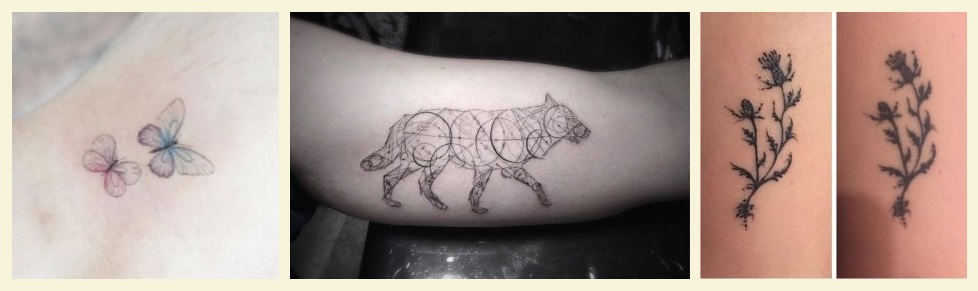
Fading of parts of a tattoo can also occur due to the tattooing technique itself. If the line is not inserted deeply enough into the skin, meaning it stays in the epidermis rather than penetrating the dermis (a technique popularly known as “fine line tattooing“, involving the use of the thinnest needle to create very delicate, airy lines), that line will become progressively faint until it disappears completely. This is because the epidermis is the layer of the skin that is constantly changing and regenerating, with cells renewing at a faster rate, and the tattoo ink is gradually expelled from the body as a “foreign substance”.
Another issue with the “fine line” technique is that it neglects one of the basic principles of tattooing, which is the minimum feasibility. A lot of details are crammed into a small tattoo, and it looks great for the first few months. It is almost impossible to find pictures of old tattoos done with this technique on the internet. The most common reason for this is that these tattoos deteriorate over time (the design becomes blurry due to too many lines being too close to each other) or they have “invisible” parts, meaning the skin expels ink in places where it was inserted too shallowly. This technique has existed for over a year, so photos of healed tattoos must exist. If you decide on “fine line tattooing“, ask the artist to show you pictures of tattoos done with that technique that are older than a year.
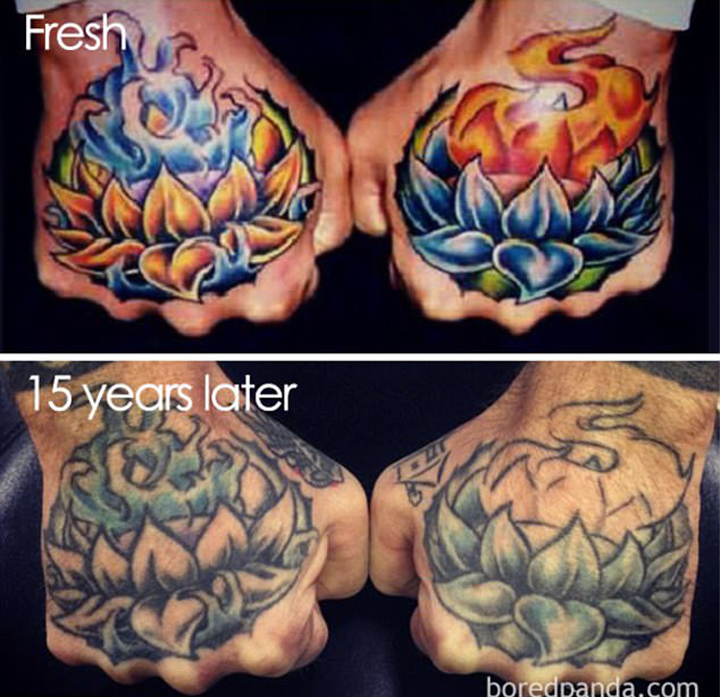
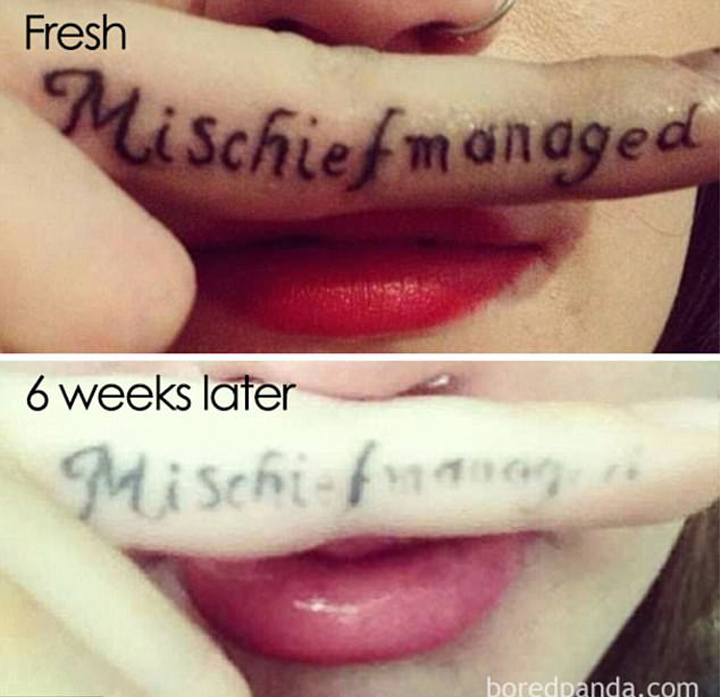
(images are examples from the internet; the tattoos were not done at Octopus)
INK REJECTION
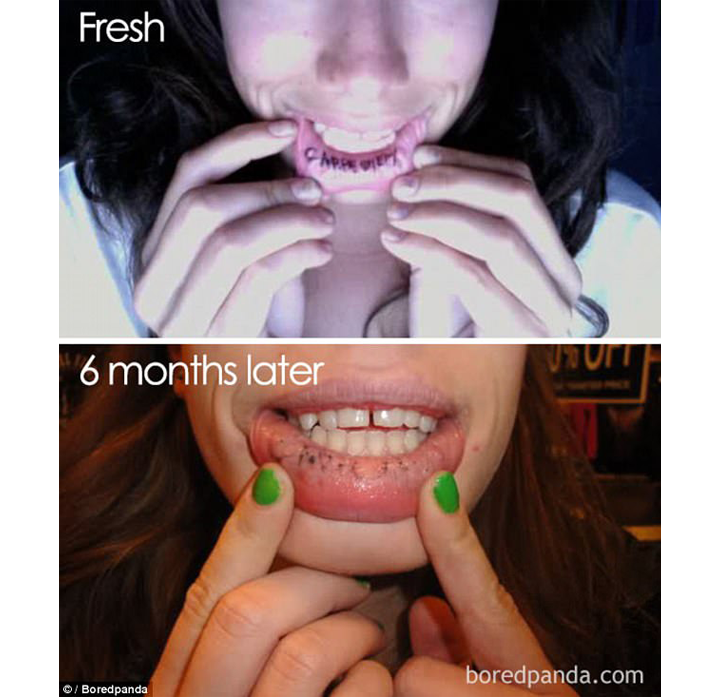
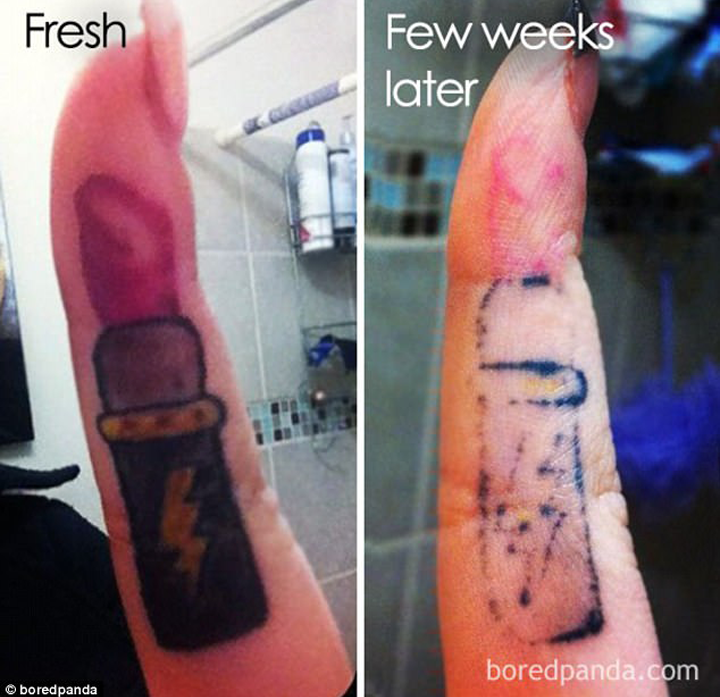
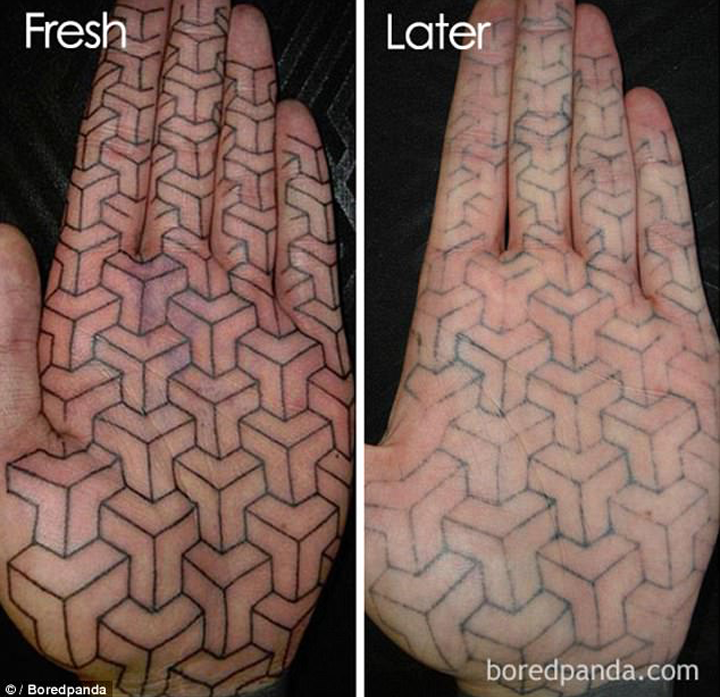
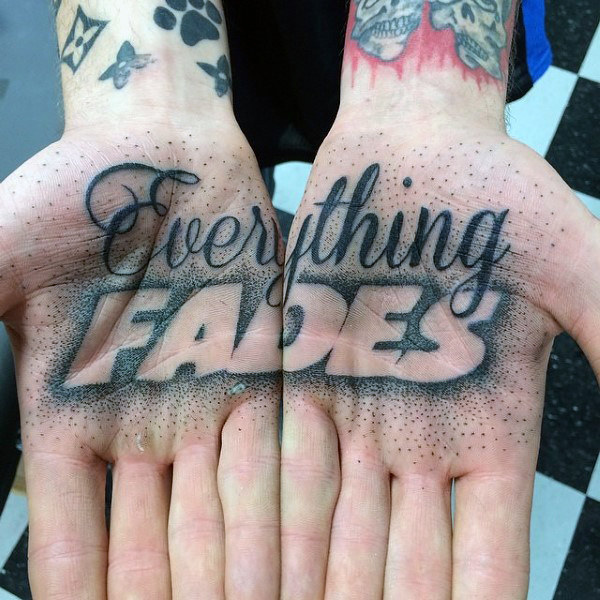
Certain parts of the body have skin that holds tattoo ink less effectively, leading to faster fading, especially on the palms and soles, the sides of the fingers, or the inner side of the lip. Skin in these areas is different from the skin elsewhere on the body. Regeneration is faster due to constant exposure to various influences. The hands are one of the most exposed areas because we continuously touch things, wash our hands, use various chemicals and cosmetics, etc. Ink blowout and fading in these cases are normal and sometimes inevitable.
For skin that holds ink well, fading of the tattoo can occur for several reasons:
- If a person consumes alcohol, other intoxicating substances, or medications that dilate the circulatory system before getting a tattoo, it can lead to more bleeding during the tattooing process, resulting in the expulsion of a larger amount of tattoo ink and a paler tattoo after the healing period.
- If you frequently expose your tattoo to the sun or tanning beds, the skin absorbs UV rays, which act as a mini version of tattoo removal lasers, breaking down the pigment of the tattoo ink, which then enters the bloodstream.
- If the tattoo ink colors are very similar to the natural color of your skin, there is a high probability that the tattoo will completely disappear over time. This is especially true for various shades of yellow, orange, brown, pink, white, and so on.
- Low-quality tattoo inks tend to fade more quickly.
Given the number of images on the Internet and the advancement of image processing software, it has become increasingly difficult to distinguish between real tattoo pictures and Photoshop. Keep in mind that every profession, including tattooing, has specific rules that are in place to ensure both the client and the service provider are satisfied with the end result. Every tattoo is a reflection of the professionalism and the representation of the work of the tattoo artist who created it. There will always be someone willing to tattoo whatever you want without offering advice, even if the design choice is not sustainable in the long run. Perhaps they’re more interested in having a cool picture for Instagram or need money at the time, so they don’t want to turn you away.
Just because it looks good on paper or in an internet image, doesn’t mean it will look good on your skin.
(images of tattoos are from the link)